In April 2024 Sheikh Mohammed bin Rashid approved the designs for a new passenger terminal at Al Maktoum International Airport and the start of construction at a cost of AED 128 billion. The published figures are unusually specific, which makes this one of the few infrastructure stories in Dubai you can underwrite from a primary source rather than a brochure.
Almost every property article written since treats it as a single trade: the airport is in Dubai South, so buy Dubai South. That is half of it, and it is the half everybody has already priced.
The other half is that Dubai has also said the current airport's operations will move. Dubai International sits on roughly 29 square kilometres in the middle of the city, surrounded by some of the oldest and cheapest residential stock in the emirate, under a flight path. What happens to that land, and to the districts beneath it, is the larger and far less discussed question.
What Has Actually Been Committed
| Measure | Published figure |
|---|---|
| Construction cost | AED 128 billion |
| Ultimate passenger capacity | 260 million a year |
| Cargo capacity | 12 million tonnes a year |
| Runways | Five parallel |
| Aircraft contact stands | More than 400 |
| Area covered | 70 square kilometres |
| Size against Dubai International | About five times |
| First phase | Within ten years, at 150 million passengers a year |
| Sustainability target | LEED Gold certification |
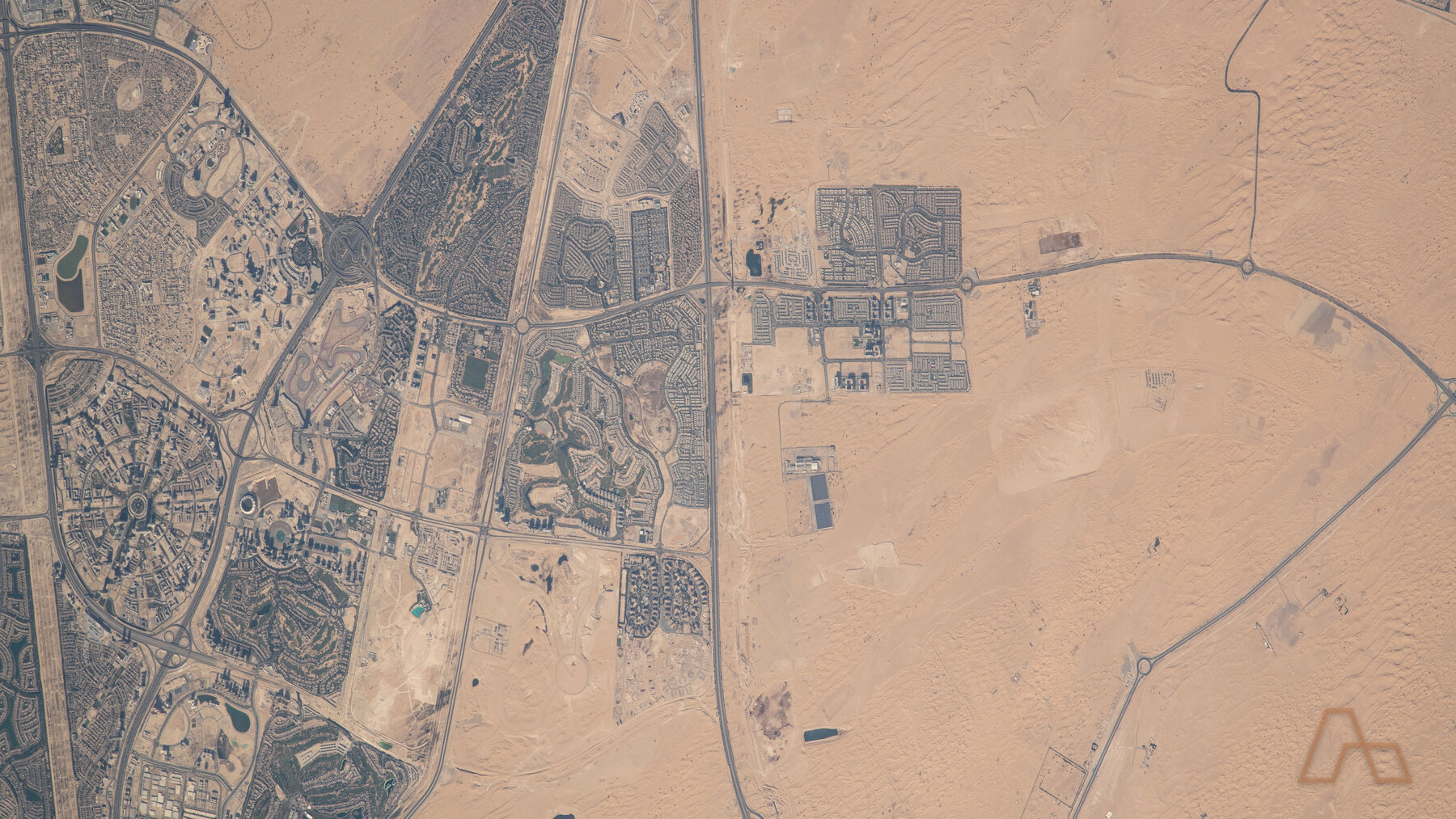
Two statements in the official announcement matter more to property than any of those numbers. The first is that all operations at Dubai International Airport will be transferred to the new airport in the coming years. The second is that an entire city will be built around the airport in Dubai South, and that demand for housing for a million people will follow, with over a million people living and working in the district.
That last figure is worth dwelling on, because it is the government's own projection rather than a developer's. When a sales pitch says a million people are coming to Dubai South, this is where the number comes from. It is still a projection, and it has no date attached.
Trade One: Dubai South, and What You Are Really Buying
The Dubai South case is straightforward and well known. The airport anchors an employment cluster — aviation, logistics, the free zone — and Expo City sits next door with finished public infrastructure and a Metro connection. Prices are among the lowest for new-build freehold in the emirate, and the archive's Dubai South and Expo City guides cover the current entry points in detail.
What is less often said is what the trade actually depends on. You are not buying airport proximity, because airport proximity on its own is not a residential amenity — most people do not want to live next to a runway. You are buying the employment the airport generates, and the housing demand that employment creates, on a timeline you do not control.
The published phase-one horizon is ten years from 2024 at 150 million passengers. Dubai Airports has separately indicated a move beginning around 2032, with the full transition later. Either way this is a long-dated position, and the honest framing is that the yield you collect in the meantime is the return, and the airport is the option.
That reframing has a practical consequence. If the thesis is employment-driven demand on a ten-year view, then the right test on any specific unit is whether it rents today at a sensible yield to the people already working there. A unit that only works if the projection lands is not an investment in Dubai South, it is a bet on a date.
Trade Two: The Districts Under the Current Flight Path
This is the part almost nobody writes about.
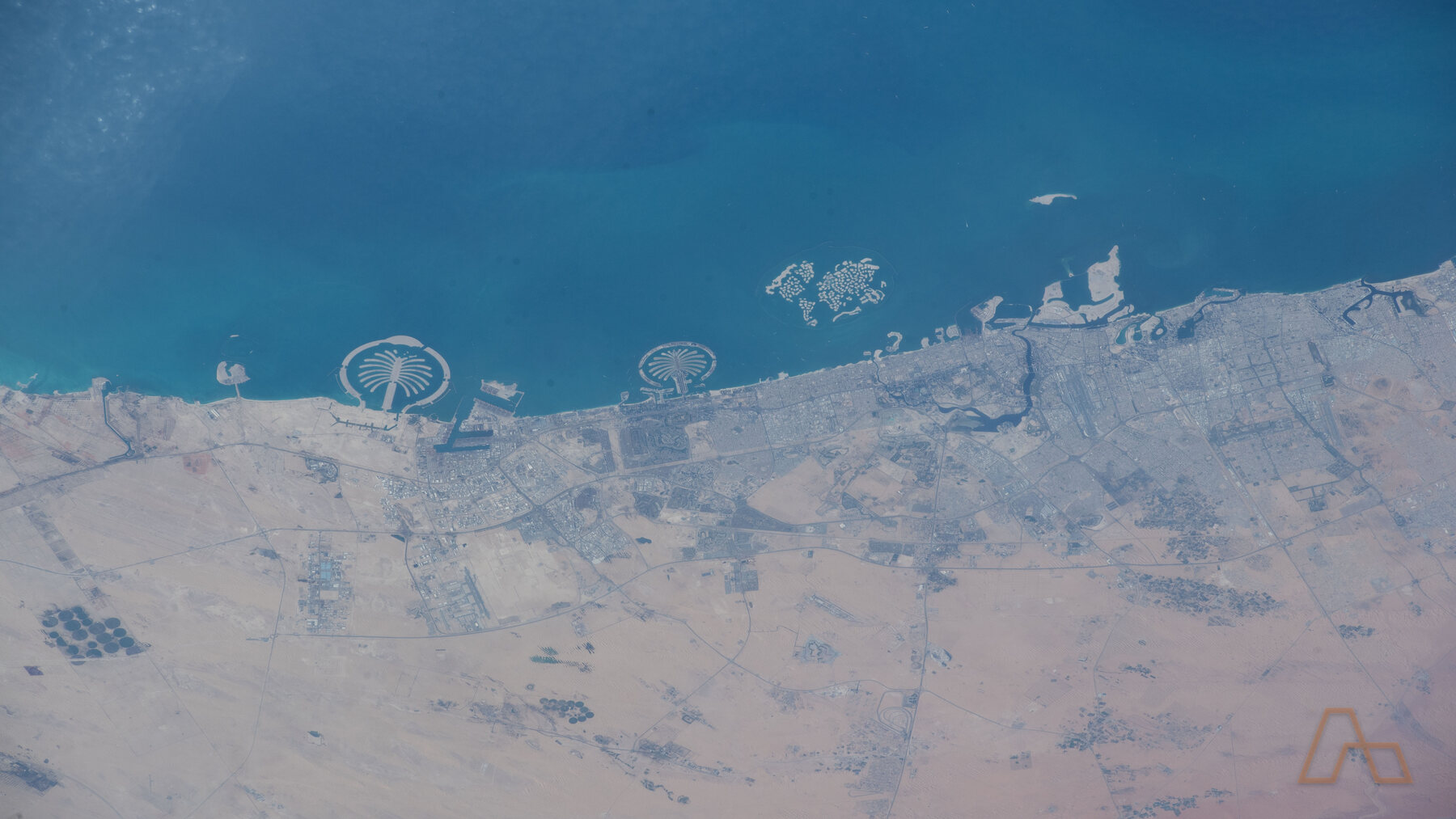
Dubai International is not on the edge of the city. It is embedded in it, with Deira, Al Garhoud, Al Nahda, Mirdif and the Al Qusais corridor arranged around it. Those districts share a particular profile: central, dense, well connected by Metro, with ageing building stock, rents well below the city average and, for decades, aircraft noise overhead.
If operations genuinely move, two things happen to that stock at once. The noise constraint lifts, and roughly 29 square kilometres of prime, centrally located land is released for something else. Dubai Airports has publicly described the redevelopment of the site as a strategic focus and framed it as a mixed-use district.
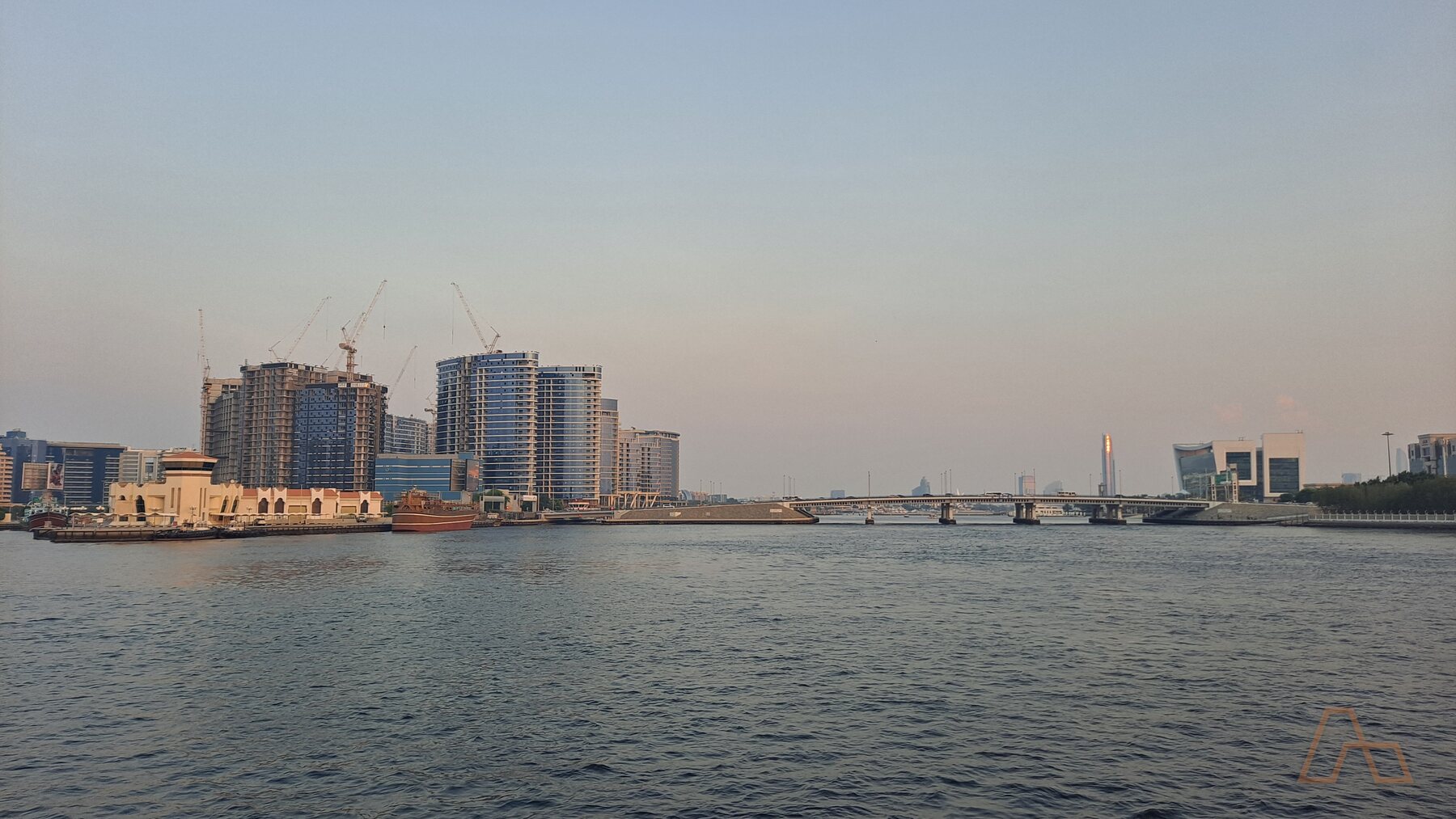
Set against the 2040 plan, this stops looking coincidental. The plan already designates Deira and Bur Dubai as one of the five urban centres and as the regeneration project with the longest timeline. An airport relocation that lifts a noise constraint and frees a very large central landbank is the mechanism by which a regeneration designation stops being a designation.
Three cautions keep this from being a recommendation. There is no published masterplan for the Dubai International site, so what gets built there is unknown. The timeline is longer than the new airport's, because the land is not available until the move completes. And a very large release of central supply is not unambiguously good for existing owners nearby — it can lift a district's standing and cap its prices at the same time.
What can be said is that the stock around the current airport is priced today with a noise discount and no redevelopment expectation, and that both of those inputs have a date on which they change. That is a different shape of position from Dubai South, and the two are not substitutes.
How to Read Either Trade Without Getting Sold
- Separate the funded from the projected. The AED 128 billion terminal, the five runways and the 400 stands are committed and under construction. The million residents in Dubai South and the redevelopment of the Dubai International site are projections, one of them without any published plan at all.
- Ask what is deliverable before the airport. Roads, a Metro connection, schools and a functioning retail base change a district's rent within a few years. The airport changes it over fifteen.
- Underwrite the current yield, not the future one. If a unit does not work on today's rent, the thesis is doing all the work.
- Treat the relocation date as a range. Reported timelines for the move cluster around the early-to-mid 2030s and have moved before. A fifteen-year holding period absorbs that; a three-year one does not.
- Do not pay a premium for the story. The airport is in every Dubai South pitch already, which means some of it is in the price. The part that is not in any price is the flight-path districts, precisely because nobody is pitching it.
The Costs Do Not Change
Whichever side of this you take, the transaction arithmetic is the same, and a long thesis has to clear it first. Dubai's round trip is roughly 8.7% — about 6.5% to buy with cash, nearer 9% with a mortgage, and about 2.2% to sell. On a AED 1.5 million purchase that is about AED 97,780 in buying costs. Fifteen years absorbs it comfortably. Three years often does not.
Questions Investors Ask
How big will Al Maktoum International Airport be?
The approved plan is for 260 million passengers a year and 12 million tonnes of cargo, with five parallel runways, more than 400 aircraft contact stands, across 70 square kilometres — about five times the size of Dubai International. The first phase is to be delivered within ten years of the April 2024 approval at a capacity of 150 million passengers a year, at a construction cost of AED 128 billion.
Will Dubai International Airport close?
The official announcement states that all operations at Dubai International will be transferred to Al Maktoum International in the coming years, and Dubai Airports has indicated a move beginning in the early 2030s with redevelopment of the existing site as a strategic focus. No closure date has been formally published, and reported timelines have shifted before, so treat the date as a range rather than a commitment.
Is Dubai South a good investment because of the airport?
It is a long-horizon one. The airport generates employment and the government's own projection is for over a million people living and working in the district, but no date is attached to that. The sound test is whether a specific unit rents today at a sensible yield to people already working in the area. If the numbers only work on the projection, you are buying a timeline rather than a property.
What will happen to the Dubai International Airport land?
Dubai Airports has publicly described redevelopment of the roughly 29 square kilometre site as a strategic focus and framed it as a mixed-use urban district, but no masterplan has been published. The land only becomes available as operations move, so it sits behind the new airport on the timeline.
Which areas benefit if the airport moves?
Two different sets. Dubai South, Expo City and the Jebel Ali logistics corridor gain employment and infrastructure at the new airport. Separately, the districts under the current flight path — Deira, Al Garhoud, Al Nahda, Mirdif and the Al Qusais corridor — would lose a noise constraint and sit beside a very large central redevelopment site. The second group is priced today with no expectation of either.
The Short Version
The committed facts are a AED 128 billion terminal for 260 million passengers, five runways, 70 square kilometres, phase one within ten years, and an official statement that Dubai International's operations will move. The Dubai South trade is already in the price. The flight-path districts are not, and they carry a longer timeline and no published plan — which is exactly why they are cheap.