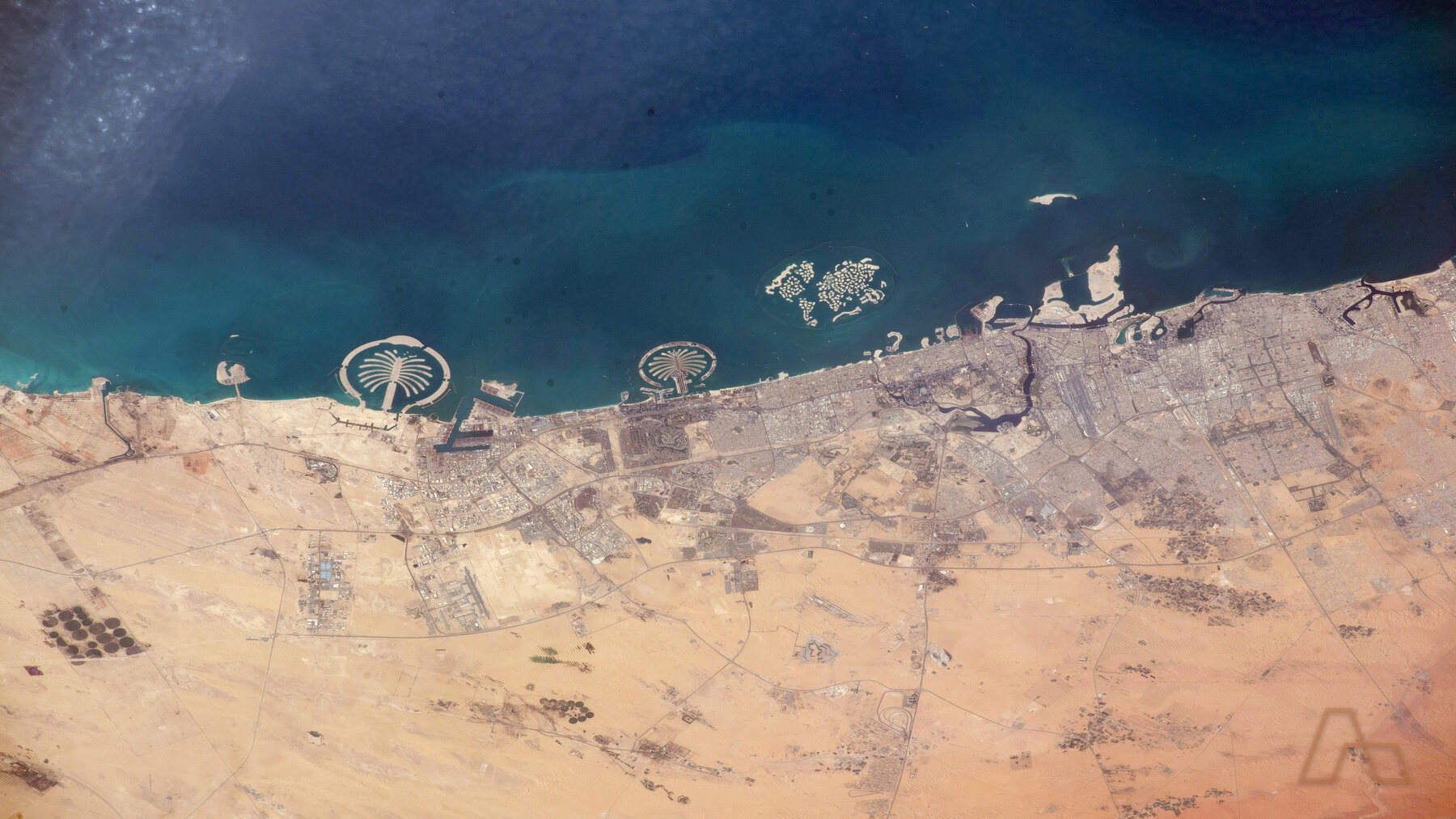
Buying land in Dubai looks like a cheaper route into the market than buying a finished villa, and for the right buyer it is. It is also the one Dubai purchase where the title deed tells you least about what you have bought. Two plots of identical size, a few hundred metres apart, can carry completely different rights: one allows a single family villa, the other a six-storey residential building. The difference is zoning, and it is not written on the deed.
The buyers who get hurt are the ones who negotiate on price per square foot and discover afterwards that they cannot build what they intended. This guide covers who can buy land in Dubai, how the zoning system works, the two documents that define what you can build, and the costs that make small plots uneconomic.
Who Can Buy Land, and Where
Freehold ownership of land by non-UAE nationals comes from Regulation No. 3 of 2006, which provides that non-UAE nationals may acquire freehold ownership rights over real property without time restriction in respect of the land plots indicated on maps issued by the Dubai Land Department. The archive's freehold and foreign ownership guide covers the designated areas in detail.
The practical point for a land buyer is narrower than for an apartment buyer. Freehold designation attaches to specified plots, and plenty of land in Dubai is not in a designated area at all. UAE and GCC nationals can own land across the emirate. Everyone else is restricted to the designated plots, so the first question on any land purchase is not the price but whether you are eligible to hold that specific plot.
There is also a route that is not ownership. Musataha is a registrable right to use a plot and to build on it for a long fixed term, and Dubai regulates its grant over commercial land by a separate decree. It appears most often in commercial and industrial contexts and in government land grants. If a deal is offered to you as land but the documents describe a Musataha or a long lease, you are buying a time-limited right, not freehold, and it should be priced as one.
The Zoning System Nobody Reads
The instrument that classifies land use in Dubai is Local Order No. 2 of 1999 Concerning Classification and Regulation of Land Use in the Emirate of Dubai. It is old, it is still the reference point, and it is where the residential zone codes come from.
The codes set minimum plot areas and the kind of development permitted:
| Zone code | Minimum plot area |
|---|---|
| R1 | 40,000 sq ft |
| R2 | 10,000 sq ft |
| R3 | 7,500 sq ft |
| R4 | 5,000 sq ft |
| R5 | 25,000 sq ft |
| R5T townhouses | 1,150 sq ft |
| R6 | residential buildings up to four storeys |
Note that these are minimum plot areas for the zone, not a ranking by density. R5 carries a larger minimum than R2, R3 and R4 despite its higher number, so do not read the sequence as a scale. R1 through R5 cover private family residences, R5T covers townhouses, and R6 is where you move from villas to residential buildings.
The enforcement provision is Article 4, and it is broad. No land may be used, no building in any zone may be occupied, and no change may be made to land use or building occupancy in any zone unless that use, occupancy or change complies with the permitted uses for that zone and the relevant Planning Permit is obtained from the competent department. A Planning Permit is defined as the initial permit authorising construction or any of the permitted types of use or occupancy.
So the Planning Permit is the gate, and it comes before the building permit rather than instead of it. Article 5 allows the competent department to approve a conditional use or grant an exemption, which is the discretionary route people rely on when a plot does not quite fit its zone. Treat that as a possibility to apply for, never as something to assume in a purchase price.
Article 12 sets the consequences. A violation attracts a fine of up to AED 50,000, and the department can also terminate all land use and building occupancy and charge the violator the costs plus 20% of those costs as administrative expenses. Building something the zone does not permit is not a paperwork problem that gets regularised later.
Above all this sits Law No. 16 of 2023 Concerning Urban Planning, which governs urban planning across the whole emirate including Special Development Zones and free zones, and establishes the Supreme Urban Planning Committee and the emirate's Structure Plan. It is the strategic layer that shapes what zoning will allow over time rather than something you apply under plot by plot.
The Two Documents That Define What You Bought
Before you commit to a plot, you need the affection plan and the FAR for that plot. Everything else is secondary.
The affection plan is issued for the plot and identifies it along with its permitted use. It is the document that tells you whether you hold a villa plot, a residential building plot, a commercial plot or something else. Ask for a current one, issued for the specific plot number, not a community-level map.
FAR, the floor area ratio, is the second number and it is the one that sets value. FAR is the ratio of total permitted built floor area to plot area, so a 10,000 square foot plot with a FAR of 1.0 permits 10,000 square feet of building. FAR limits in Dubai are set by Dubai Municipality and vary widely by community, zone and land use category, running from around 0.6 in villa communities to 12 or more in dense districts such as Downtown.
That range is why price per square foot of land is close to meaningless on its own. A plot at FAR 4 supports four times the sellable area of an identical plot at FAR 1. The figure to compare across plots is price per square foot of permitted built area, not price per square foot of land.
Within a master community there is usually a third layer: the master developer's own development guidelines and design controls, governing heights, setbacks, materials and sometimes how long you have to complete construction. These are contractual and they bind you as a plot owner on top of the municipal rules.
What It Costs, and Why Small Plots Disappoint
Land transfers through the Dubai Land Department on the same basic fee structure as any other property. The 4% transfer fee applies, with the DLD admin fee and trustee office fees on top, on the archive's figures roughly AED 4,000 below AED 500,000 and AED 4,200 at or above, plus VAT. Agency commission is typically 2% plus 5% VAT.
What makes land different is everything that follows the purchase.
- Design and engineering consultancy, since you need a licensed consultant to produce drawings and secure permits
- Planning Permit and building permit fees
- Utility connections, including DEWA infrastructure, which on an unserviced plot can be a major line item rather than a formality
- Construction cost, which is the dominant number and is exposed to build-cost inflation over the programme
- Finance, which is harder to arrange on land than on a completed home, as land and construction lending is a different product from a residential mortgage at the familiar loan-to-value caps
- Holding costs for the period between purchase and completion, during which the asset produces no income
That last point is the one that catches investors. A finished apartment starts generating rent the month it completes. A plot generates nothing for the entire design, permitting and construction period, and there is no Ejari, no tenant and no yield until there is a building. The archive's rental yield guide is the right comparison to run before assuming land is the better investment.
Questions Buyers Ask
Can foreigners buy land in Dubai?
Non-UAE nationals can own land freehold, but only in designated areas. Regulation No. 3 of 2006 permits non-UAE nationals to hold freehold without time restriction in respect of the land plots shown on maps issued by the Dubai Land Department. Outside those designated plots, freehold ownership is limited to UAE and GCC nationals, so eligibility for the specific plot is the first thing to confirm.
What is an affection plan in Dubai?
It is the plot-level document that identifies a specific parcel of land and states its permitted use, such as residential, commercial, hotel or industrial. It is what tells you what category of development the plot allows, so it should be obtained for the exact plot number before any price is agreed, rather than relying on a community map or a seller's description.
What does FAR mean when buying a Dubai plot?
FAR, or floor area ratio, is the ratio between the total built floor area you are permitted to construct and the area of the plot. A FAR of 2.0 on a 10,000 square foot plot permits 20,000 square feet of building. Dubai Municipality sets FAR by zone and community, ranging from roughly 0.6 in villa areas to 12 or more in the densest districts, which is why it drives land value more than plot size does.
What happens if I build something the zoning does not allow?
Article 4 of Local Order No. 2 of 1999 prohibits any use, occupancy or change of use without compliance with the zone's permitted uses and a Planning Permit from the competent department. Article 12 allows a fine of up to AED 50,000 and permits the department to terminate the land use and occupancy altogether and charge the violator the costs plus 20% as administrative expenses.
Is buying land in Dubai a better investment than buying an apartment?
It can produce a better margin for a buyer who can manage a construction programme, but it is a development project rather than a passive investment. A plot produces no rent through the design, permitting and build period, financing is harder than a residential mortgage, and construction cost is the main risk. An apartment starts earning on completion, which is a fundamentally different cash-flow profile.
The Short Version
A Dubai land purchase is decided by three things the title deed does not tell you: whether you are eligible to own that plot, what the zone permits, and what FAR applies.
Check eligibility against the designated freehold plots under Regulation No. 3 of 2006. Get the plot-specific affection plan for permitted use. Get the FAR, and compare plots on price per square foot of permitted built area rather than price per square foot of land. Then read the master developer's design controls on top, because they bind you contractually even where the municipal rules would allow more.
Local Order No. 2 of 1999 is the zoning instrument, its Article 4 requires a Planning Permit before construction or any change of use, and its Article 12 backs that with a fine of up to AED 50,000 plus the cost of terminating a non-compliant use. Build what the zone allows, or apply for a conditional use before you buy, not after.