There is a number doing a great deal of work in the Dubai property conversation right now, and it is the 2027 pipeline. Depending on who is counting, it is 136,000 units, or 162,500, or some larger figure that has been summed across several years and quoted as though it were one. It is used to argue that prices must fall, that rents must fall, and that anyone buying now is buying into a wall of supply.
The number is real. What is wrong is the arithmetic performed on it.
A pipeline figure is a schedule of units whose developers have indicated a completion date in that year. It is not a count of homes that will exist. And Dubai publishes the one statistic that converts the first into the second, which almost nobody quotes.
How Many Homes Did Dubai Actually Deliver in 2026?
Start with what landed, because it is the anchor for everything else.
Cavendish Maxwell, in its 30 July 2026 review, recorded 24,800 completions in the first half of 2026, up 37.6 per cent on the same period a year earlier. Of those, 18,900 were apartments, up 43 per cent, and 5,900 were villas and townhouses, up 22.6 per cent.
The third quarter added roughly 12,400 more, taking the nine-month total to about 38,000 units. For context, the whole of 2025 delivered in the region of 40,000. So 2026 passed a full prior year inside nine months, and the full-year expectation sits around 55,600 units on Cushman and Wakefield Core's 20 August 2026 count and 56,600 on Colliers' 2 September figure.
Those two numbers are close. The quarterly ones are not, and it is worth pausing on why. For the second quarter of 2026, Cushman and Wakefield Core counted 13,218 units and Colliers counted 11,650. Same quarter, same city, a gap of more than 1,500 homes.
Neither is wrong. Consultancies differ on when a building counts as complete — at the building completion certificate, at the first handover, at the point the units are registered — and on whether serviced apartments, hotel apartments and staff accommodation are residential. When two Dubai supply figures disagree, the question is almost always what was counted, not who made a mistake. It is the same lesson the price data teaches: an average of deals and a per-square-foot index are different instruments, and so are two completion counts.
Why a Pipeline Number Is Not a Forecast
Here is the statistic that reframes the whole argument. In the same 30 July review, Cavendish Maxwell reported that 41.3 per cent of the units scheduled for the first half of 2026 were actually completed in it.
Not 41.3 per cent of the pipeline was cancelled. They slipped. Dubai's handover schedules move for the ordinary reasons construction schedules move everywhere: contractor capacity, authority approvals, utility connections, snagging, and the simple fact that a developer's stated completion date is a commercial statement made years in advance.
So the pipeline is a ceiling, and the delivery rate is the discount.
| Year | Scheduled | At the observed delivery rate |
|---|---|---|
| 2027 | 162,500 units | roughly 67,000 |
| 2028 | 128,200 units | roughly 53,000 |
Treat those right-hand figures as an order of magnitude rather than a prediction. The delivery rate is not a constant, and a half-year sample is a thin basis for a multiplier. But it is a far better basis than one, which is what every headline quoting the raw pipeline is implicitly using.
And note what the discount does not do. Roughly 67,000 homes is still a very large year, well above anything Dubai has delivered. The honest conclusion is not that the supply story is fictional. It is that the supply story is a serious but ordinary absorption question, not a cliff — and that the units which slip out of 2027 land in 2028 and 2029, which is why the pipeline for those years keeps being revised upward rather than clearing.
The Split Nobody Prices: Apartments and Villas Are Two Markets
This is the part that matters more than the headline total, and it is almost always averaged away.
Of the 47,000 units scheduled for the second half of 2026, 82.5 per cent were apartments. The first-half completions ran the same way: 18,900 apartments against 5,900 villas and townhouses, a ratio of better than three to one. The villa and townhouse pipeline is a fraction of the apartment pipeline in every published schedule for 2027, and while 2028 is expected to improve on 2027, it improves from a small base.
So Dubai is running two housing markets with opposite supply conditions at the same time:
- Apartments. Heavy, clustered delivery into 2027 to 2029, concentrated in the newer high-density districts. This is where genuine absorption risk sits, and it is location-specific rather than city-wide.
- Villas and townhouses. Structurally short. Land for low-density housing inside the established ring is finite, the new masterplans deliver slowly, and demand from families on long residence permits is the most durable demand in the emirate.
A single city-wide price forecast averages those two into a number that describes neither. It is the mix problem again, in a different costume: when a market contains two populations moving in opposite directions, the average moves with whichever one is larger that quarter, and tells you nothing about the asset you own.
Where the Pressure Actually Lands
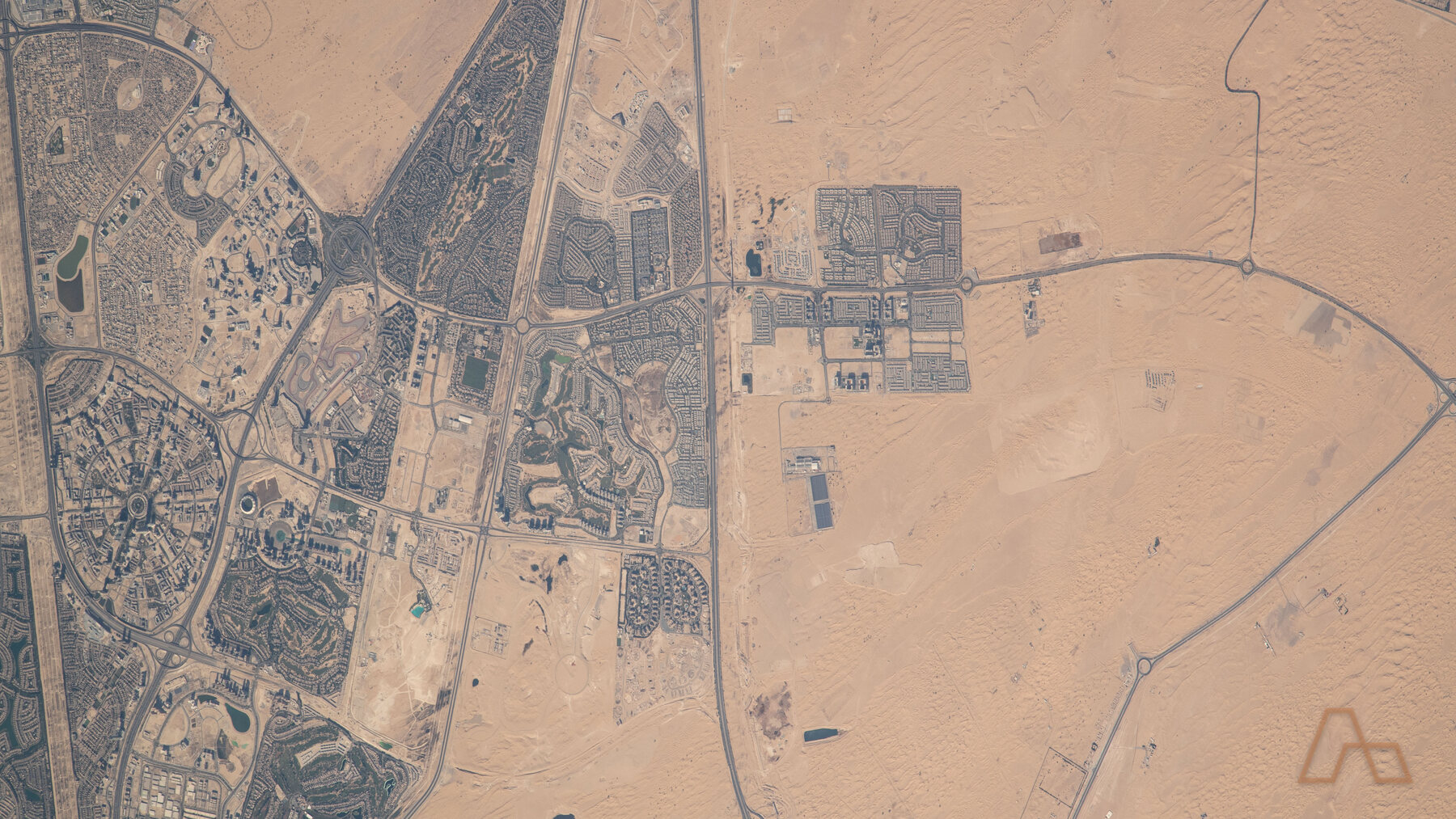
Supply risk in Dubai is not spread evenly, and the useful version of the question is not "is Dubai oversupplied" but "is my building's catchment oversupplied in the next twenty-four months".
Three characteristics concentrate the risk:
- Apartment stock in districts with clustered completion dates. A community receiving several thousand units inside eighteen months absorbs them differently from one receiving the same total over five years.
- Investor-heavy buildings with near-identical units. Where several hundred apartments of the same layout hit the leasing market in the same quarter, the price-setter is whoever needs a tenant most urgently, and studios and one-bedrooms with no differentiation have nothing to defend a rent with.
- Emerging locations whose infrastructure arrives after the residents. Supply and amenity rarely complete together, and the gap is paid for in rent.
What has absorbed the record deliveries so far is population. Occupancy across Dubai has been reported at around 97 per cent, which is the figure to watch quarter by quarter, because it is the one that would move first if absorption genuinely stalled. Prices and rents are lagging indicators by comparison.
What This Means If You Are Buying
Four practical consequences, none of which require a view on where the market goes.
Check your own catchment, not the city. Ask the agent how many units are scheduled for completion within a fifteen-minute radius over the next two years. The answer is researchable, and a reluctance to research it is itself informative.
Discount developer handover dates. If fewer than half of the units scheduled for a half-year arrive in it, then an off-plan unit sold for 2028 handover is realistically a 2029 asset. Price the delay into your yield model and your rent-versus-buy calculation, and read the grace period and the anticipated completion date in the sale and purchase agreement rather than the brochure.
Treat the villa and apartment decisions as different decisions. They face opposite supply conditions. A yield comparison that ignores that is comparing the wrong things.
Differentiation is the defence. In an apartment-heavy delivery cycle, the units that hold rent are the ones that are not interchangeable: a better floor, a real view, a layout the tower does not repeat two hundred times, a building with a credible service charge history.
What This Means If You Are Selling or Letting
If you own an apartment in a district with heavy scheduled completions, your competition over the next two years is not the resale listings currently on the portals. It is brand-new stock with a developer payment plan attached, and it will arrive in batches.
That argues for acting before the batch rather than after it, and for pricing against what actually registered rather than against asking prices, which is the mistake this archive keeps returning to because it keeps being made.
If you own a villa or townhouse in an established community, the supply argument is largely not about you, and you should be sceptical of any agent who uses a city-wide oversupply narrative to talk your asking price down.
The Short Version
- Dubai delivered about 38,000 homes in the first nine months of 2026, with full-year expectations near 55,600 to 56,600 against roughly 40,000 in 2025.
- 41.3 per cent of the units scheduled for the first half of 2026 were completed in it — the single most useful supply statistic published, and the one the oversupply headlines omit.
- Applying that rate, the 162,500 units scheduled for 2027 imply something closer to 67,000 actual homes, and the 128,200 scheduled for 2028 imply about 53,000.
- That is still a very large supply year. The conclusion is an absorption question, not a collapse.
- 82.5 per cent of scheduled near-term supply is apartments. Dubai has an apartment delivery wave and a villa shortage simultaneously.
- Consultancy counts of the same quarter differ — 13,218 against 11,650 for the second quarter of 2026 — because they define completion differently. Check the definition before concluding one is wrong.
- Risk is concentrated in apartment stock with clustered completions, interchangeable investor units, and locations whose infrastructure lags their residents.
- Occupancy at roughly 97 per cent is the indicator that would move first if absorption stalled. Watch it ahead of prices.
Frequently Asked Questions
01How many new homes will Dubai actually deliver in 2027?
The scheduled pipeline for 2027 is about 162,500 units on Cavendish Maxwell's July 2026 count, but a pipeline is a schedule rather than a forecast. The same review found that only 41.3 per cent of the units scheduled for the first half of 2026 were actually completed in that period, because handover dates routinely slip for contractor capacity, approvals and utility connections. Applying that observed delivery rate to the 2027 schedule points to something closer to 67,000 homes. That is still a very large year by any historical measure for Dubai, so the realistic question is absorption rather than collapse, and the units that slip simply reappear in the 2028 and 2029 schedules.
02Is Dubai property oversupplied in 2026?
Not at a city-wide level on the evidence available. Dubai delivered roughly 38,000 homes in the first nine months of 2026 against about 40,000 in the whole of 2025, and occupancy has been reported at around 97 per cent, which indicates that population growth has absorbed record deliveries so far. The risk is specific rather than general. It concentrates in apartment stock in districts with several thousand units completing inside a short window, in buildings full of interchangeable investor units, and in emerging locations whose infrastructure arrives after their residents. The useful question is not whether Dubai is oversupplied but whether a particular catchment is, over the next twenty-four months.
03Why is there a villa shortage in Dubai while apartments are oversupplied?
Because the two segments have opposite supply conditions and the pipeline is overwhelmingly apartments. Of the units scheduled for the second half of 2026, 82.5 per cent were apartments, and completions in the first half of the year ran 18,900 apartments against 5,900 villas and townhouses. Low-density housing needs land, and land inside the established ring is finite, so villa supply depends on new masterplan communities that deliver slowly. Meanwhile family demand on long residence permits is the most durable demand in the emirate. A single city-wide price forecast averages these two opposing markets into a figure that describes neither.
04Why do two reports give different numbers for the same quarter's completions in Dubai?
Because they are counting different things. For the second quarter of 2026, Cushman and Wakefield Core counted 13,218 units and Colliers counted 11,650, a gap of more than 1,500 homes in the same city in the same quarter. Consultancies differ on the moment a building counts as complete, whether that is the building completion certificate, the first handover or registration of the units, and on whether serviced apartments, hotel apartments and staff accommodation belong in a residential count. When two Dubai supply figures disagree, check the definition before assuming one of them is mistaken.
05Should I buy off-plan in Dubai given the 2027 supply pipeline?
The pipeline is a reason to adjust your assumptions rather than an automatic reason to avoid off-plan. Two adjustments matter. First, discount the developer's handover date, because if fewer than half the units scheduled for a half-year arrive within it then a unit sold for 2028 handover is realistically a 2029 asset, and that delay belongs in your yield model and in your rent-versus-buy comparison. Read the anticipated completion date and the grace period in the sale and purchase agreement rather than the brochure. Second, check how many units are scheduled to complete within a fifteen-minute radius of the building over the next two years, because supply risk in Dubai is location-specific rather than market-wide.
06What is the best indicator that Dubai's supply wave is becoming a problem?
Occupancy, which has been reported at around 97 per cent across Dubai. It is the measure that would move first if absorption genuinely stalled, because a unit that cannot find a tenant shows up as a vacancy long before it shows up as a lower transacted price. Prices and rents are lagging indicators by comparison, and headline averages are particularly slow because they are mix statistics that can move for reasons unrelated to supply. Watching occupancy quarter by quarter in your own district is more informative than watching a city-wide price index.