Dubai Real Estate Heading Into 2027: What the Structural Numbers Actually Say
Every Dubai market commentary is either a boom story or a crash story, and both are usually written by somebody with a position.
The more useful exercise is to separate what is structural from what is cyclical, because they point in different directions right now, and a buyer needs to know which one applies to the specific thing they are buying.
What Is Structural and Intact
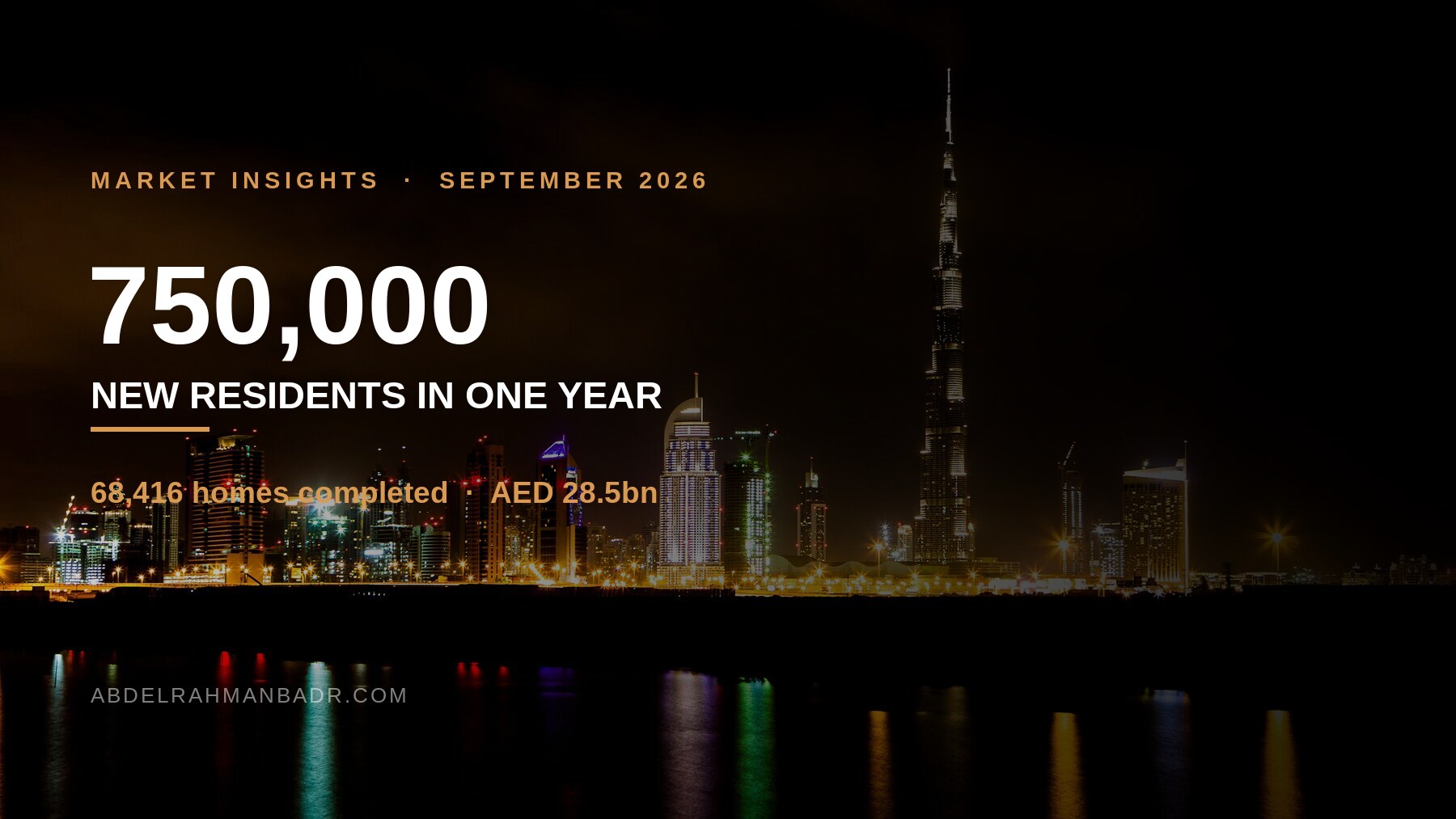
Population growth. Dubai's resident population has grown consistently and shows no sign of reversing. Every additional resident is a unit of housing demand, and this is the foundation under everything else.
Residency liberalisation. Golden Visas, property investor visas, remote work permits and retirement routes have converted a historically transient population into one with a reason to buy rather than rent.
Regulatory maturity. Escrow accounts, Oqood registration, the Mollak service charge system, the rental index and the Rental Dispute Centre are real institutional infrastructure. They reduce the tail risk that characterised earlier cycles.
Economic diversification. Trade, tourism, logistics, finance and an expanding technology sector, rather than a single dependency.
None of these are in doubt over a five-year view. If you are buying to hold for a decade, this is the paragraph that matters.
What Is Cyclical and Worth Watching
Supply. This is the variable. A very large number of units are scheduled for handover across the next two years, concentrated in specific districts: JVC, Business Bay, Arjan, Dubai South, MBR City and parts of Dubailand.
Supply at that scale does not crash a market with strong population growth. It does two other things, and both are already visible in patches:
It compresses rents in the quarters when towers complete together, because first-cycle landlords compete against each other.
It widens the gap between good and bad buildings, because tenants with forty options stop tolerating poor management, long lift waits and weak amenities.
Interest rates. Mortgage pricing follows EIBOR and the global rate cycle. The revert margin on a fixed-rate product matters more to a buyer's ten-year cost than the headline rate, and rate direction changes how many financed buyers are in the market at any moment.
Where the Pressure Falls, and Where It Does Not
Under pressure: mid-market apartments in districts with the heaviest completion pipelines, particularly generic stock in poorly differentiated buildings. If your unit is one of four hundred similar units delivered in the same year on the same street, expect a competitive first leasing cycle.
Resilient: completed stock in built-out districts with no meaningful new supply, such as Downtown, the Marina, JLT and the established villa communities. Scarcity is doing the work.
Structurally strong: villas and townhouses in mature family communities, where supply has never kept pace with demand and where the buyer is an end-user rather than an investor.
Genuinely uncertain: the very top of the ultra-prime market, which is driven by international capital flows rather than by local fundamentals, and which moves on a different clock entirely.
The Honest Risks
Concentrated handovers producing localised rent softness for several quarters at a time.
Rate sensitivity reducing the pool of financed buyers if borrowing costs rise.
Global capital flows, which affect the prime end more than the mid-market.
Investor concentration in single districts, where a large share of units are owned by non-resident investors who may list simultaneously if sentiment turns.
Quality divergence, which is a risk to individual owners rather than to the market: the badly run building underperforms regardless of what the index does.
What This Means for a Buyer Now
Buy the building, not the headline. In a higher-supply environment, building-level differences decide returns. Pull the service charge history, the reserve fund position and the arrears record.
Prefer completed stock where the pipeline is heavy. A unit with a letting history beats a render in a district where four towers complete next year.
Underwrite a conservative first leasing cycle on any off-plan purchase, and hold enough cash to fund a slower start.
Model net yield, not gross. The gap between the two widens when rents soften and service charges do not.
Extend the horizon. The structural case is a five to ten year case. It is not a twelve-month trade, and buyers who treat it as one are taking cyclical risk to capture a structural return.
Frequently Asked Questions
Is the Dubai property market going to crash?
The structural drivers, population growth, residency liberalisation and regulatory maturity, remain intact. The realistic risk is localised rent softness in districts with heavy concurrent handovers rather than a market-wide correction.
Is there oversupply in Dubai property?
Supply is the variable to watch, concentrated in specific districts such as JVC, Business Bay, Arjan and Dubai South. It tends to compress new-listing rents in heavy completion quarters rather than to depress the whole market.
Is 2027 a good time to buy property in Dubai?
It favours buyers who select carefully: completed stock in built-out districts, well-run buildings, and conservative assumptions on first-cycle rents. It is less favourable to buyers who purchase generic units in the heaviest-supply areas without diligence.
Which Dubai areas are most at risk from new supply?
Districts with the largest concurrent handover pipelines, including JVC, Business Bay, Arjan, Dubai South and parts of MBR City and Dubailand, particularly for undifferentiated mid-market apartments.
Which Dubai segments are most resilient?
Completed stock in built-out districts such as Downtown, Dubai Marina and JLT, and villas and townhouses in mature family communities where supply has consistently lagged demand.
Should I buy now or wait?
If your horizon is five to ten years, timing matters less than selection. If your horizon is under two years, you are taking cyclical risk in a high-supply period, which is a different and less favourable proposition.
The Short Version
The structural case for Dubai is intact and the cyclical picture is supply-led. That combination rewards selection and punishes generic buying. Choose built-out districts or well-differentiated buildings, prefer completed stock where the pipeline is heavy, model net yield with a conservative first year, and hold for the structural story rather than trading the cycle.
This is general market commentary, not investment advice, and reflects conditions at the time of writing in September 2026. Market conditions, supply pipelines and rates change. Confirm current figures with a licensed agent and the Dubai Land Department before making decisions.