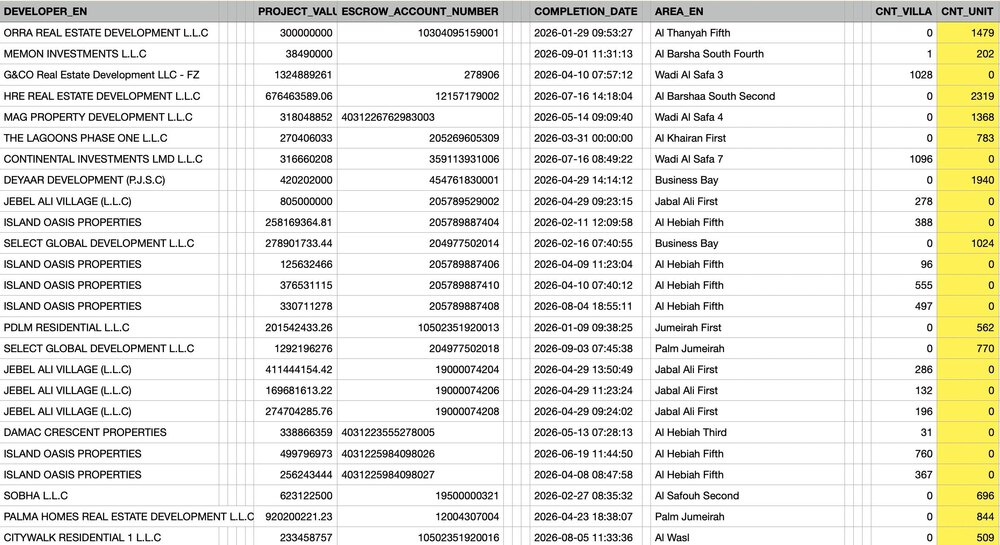
Download the data behind this article
The full Dubai Land Department extract this article is built on: 137 completed projects, 68,416 homes, AED 28.5 billion, with developer, area, unit counts, project value and construction dates for every row. Open it in Excel and check the arithmetic yourself.
CSV · 57 KB · 137 rows · opens in Excel
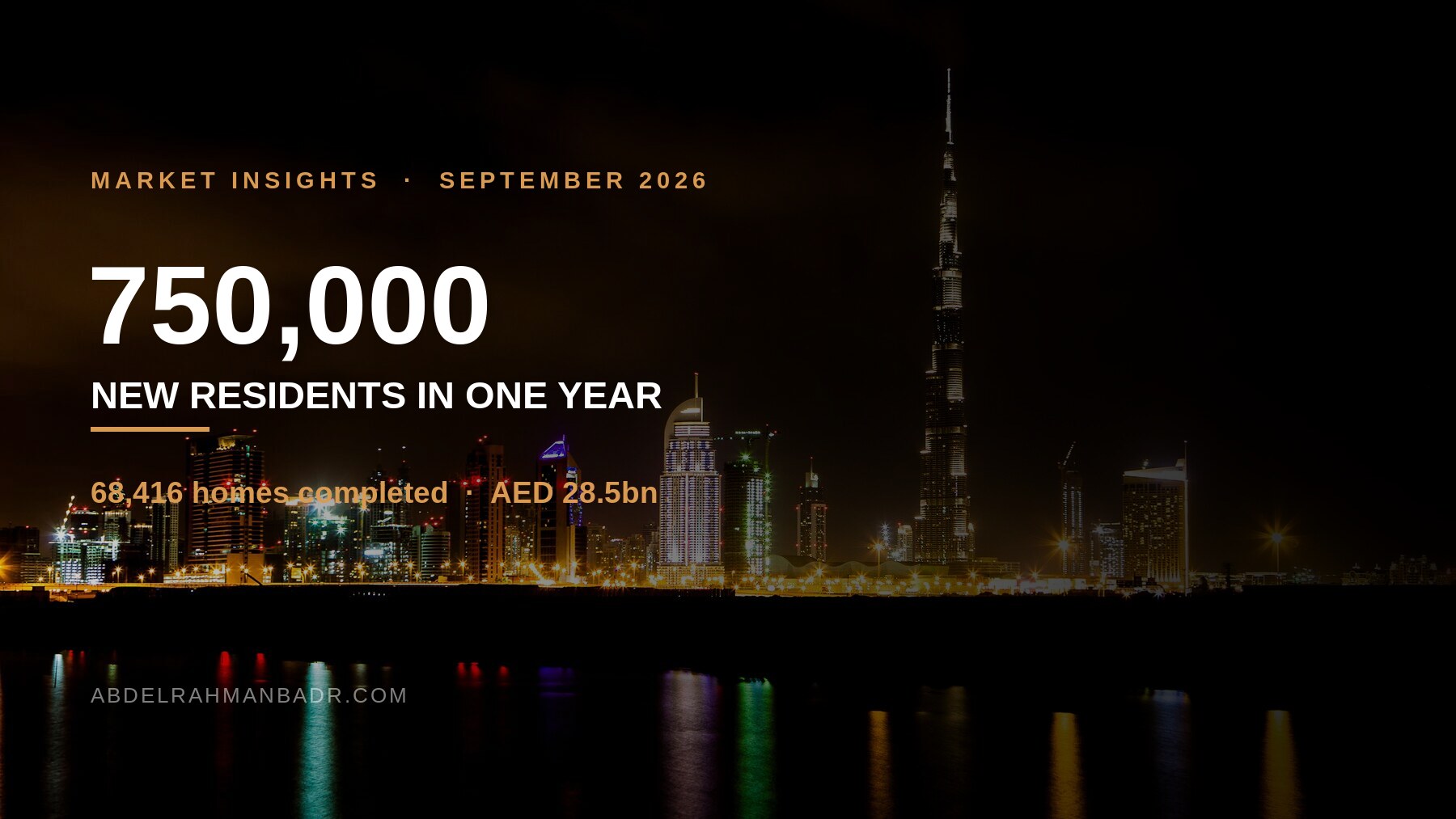
Dubai took in roughly 750,000 new residents in the twelve months to August 2026.
In the same window, a batch of 137 development projects closed out with Dubai Land Department — every one of them finished, inspected and signed off. Between them they delivered 68,416 homes.
Divide one by the other and you get the number this article is about: eleven new residents for every completed home.
That figure is rough, and further down we will take it apart properly, because a fair reading needs the caveats as much as the headline. But it points at something real. Dubai is not short of cranes. It is short of finished buildings relative to the speed at which people are arriving — and that gap, not sentiment, is what has been setting prices.
Abdelrahman Badr walks through the population and completion figures this article is built on — including the DLD extract itself. Spoken in Arabic.
Dubai's Population in 2026
As of August 2026, Dubai's population stands at 4,787,277 — an 18.6% increase on the 4,036,863 recorded in August 2025. That is roughly 750,414 additional residents in a single year.
Step back further and the trend is steadier than any one year suggests. In 2011 the emirate counted 1.93 million people. It has more than doubled since, and the growth is not mostly demographic — it is net migration: professionals, entrepreneurs and investors moving in and staying.
| Population, August 2026 | 4,787,277 |
|---|---|
| Population, August 2025 | 4,036,863 |
| Year-on-year growth | 18.6% |
| New residents in 12 months | ~750,414 |
| Population in 2011 | 1.93 million |
A city that adds three quarters of a million people in a year is not experiencing a property cycle. It is experiencing a population event that the property market has to answer.
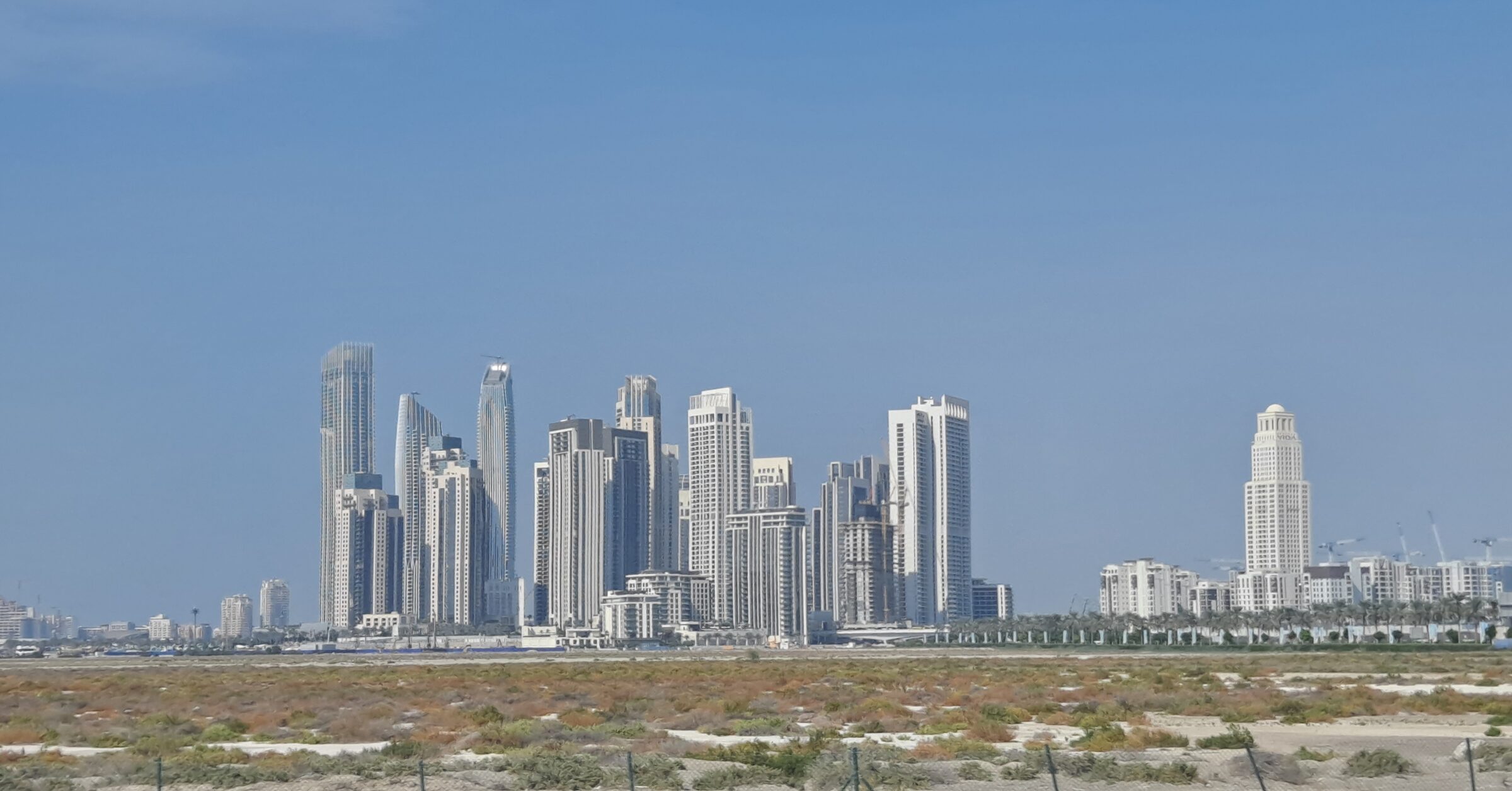
Why the Growth Is This Fast
Four forces do most of the work, and they compound.
Work. The business ecosystem keeps widening — finance, logistics, technology, tourism — and each new employer brings staff who need somewhere to live within commuting distance of an office.
Tax and ownership. No personal income tax, full foreign ownership in the free zones, and a visa framework built to keep talent and capital in place rather than passing through. The Golden Visa in particular changed the calculation for a certain kind of buyer: property stopped being a trade and became a residency decision.
Daily life. Healthcare, schools, transport and public services at a standard that lets a family move without downgrading. This is the quiet one, and it is what converts a two-year posting into a ten-year stay.
Momentum. EXPO 2020 left infrastructure and attention behind it, and the mega-projects that followed keep both topped up. Attention brings visitors; a percentage of visitors become residents.
What Actually Got Built
Here is where most population articles stop and this one starts. Growth in demand is only half an equation — the other half is what the market physically delivered against it.
The Dubai Land Department extract behind this article covers 137 completed projects. Not launches. Not off-plan inventory with a handover date somewhere in the future. Completed: construction finished, inspection done, project closed in the DLD register during 2026.
| The batch at a glance | |
|---|---|
| Projects | 137, all recorded FINISHED |
| Apartments and units | 59,922 |
| Villas and townhouses | 8,494 |
| Total homes | 68,416 |
| Combined project value | AED 28.5 billion |
| Mostly broke ground | 2022 – 2024 |
| Construction completed | 2025 – 2026 |
That last pair of rows is worth sitting with. The homes handed over now were commissioned two to four years ago, when the population was around a million people smaller. Today's supply was sized for yesterday's city. That is not a failure of planning; it is the unavoidable physics of construction. A tower takes three years. A migration wave takes three months.
Where the Homes Landed
Supply did not arrive evenly. It clustered — and the clusters tell you where the next tenant pool and the next resale market will be.
| District (DLD name) | Better known as | Projects | Homes |
|---|---|---|---|
| Business Bay | Business Bay | 6 | 7,353 |
| Al Barsha South Fourth | JVC | 25 | 7,316 |
| Hadaeq Sheikh Mohammed Bin Rashid | MBR City / Dubai Hills | 8 | 5,930 |
| Me'Aisem First | Production City area | 2 | 5,593 |
| Al Merkadh | Sobha Hartland | 5 | 3,952 |
| Al Khairan First | The Lagoons / Creek | 2 | 3,466 |
| Wadi Al Safa 3 | Dubailand | 9 | 3,091 |
| Jabal Ali First | Jebel Ali Village | 9 | 2,892 |
| Al Barshaa South Third | JVT / JVC fringe | 8 | 2,800 |
| Al Hebiah Fifth | DAMAC Lagoons | 6 | 2,663 |
Two very different patterns sit in that table.
Business Bay produced 7,353 homes from six projects — an average of over 1,200 homes each. These are large towers on expensive central land, and the economics only work at height and density.
JVC produced almost the same number from twenty-five projects — around 290 homes each. That is a mid-market district built by many smaller developers working plot by plot, and it is why JVC absorbs new residents faster than anywhere else: supply arrives continuously in small batches rather than in occasional 2,000-unit events.
The single largest project in the batch, JANNAT in the Production City area, delivered 5,302 homes on its own — more than the whole of Dubailand's nine projects combined.
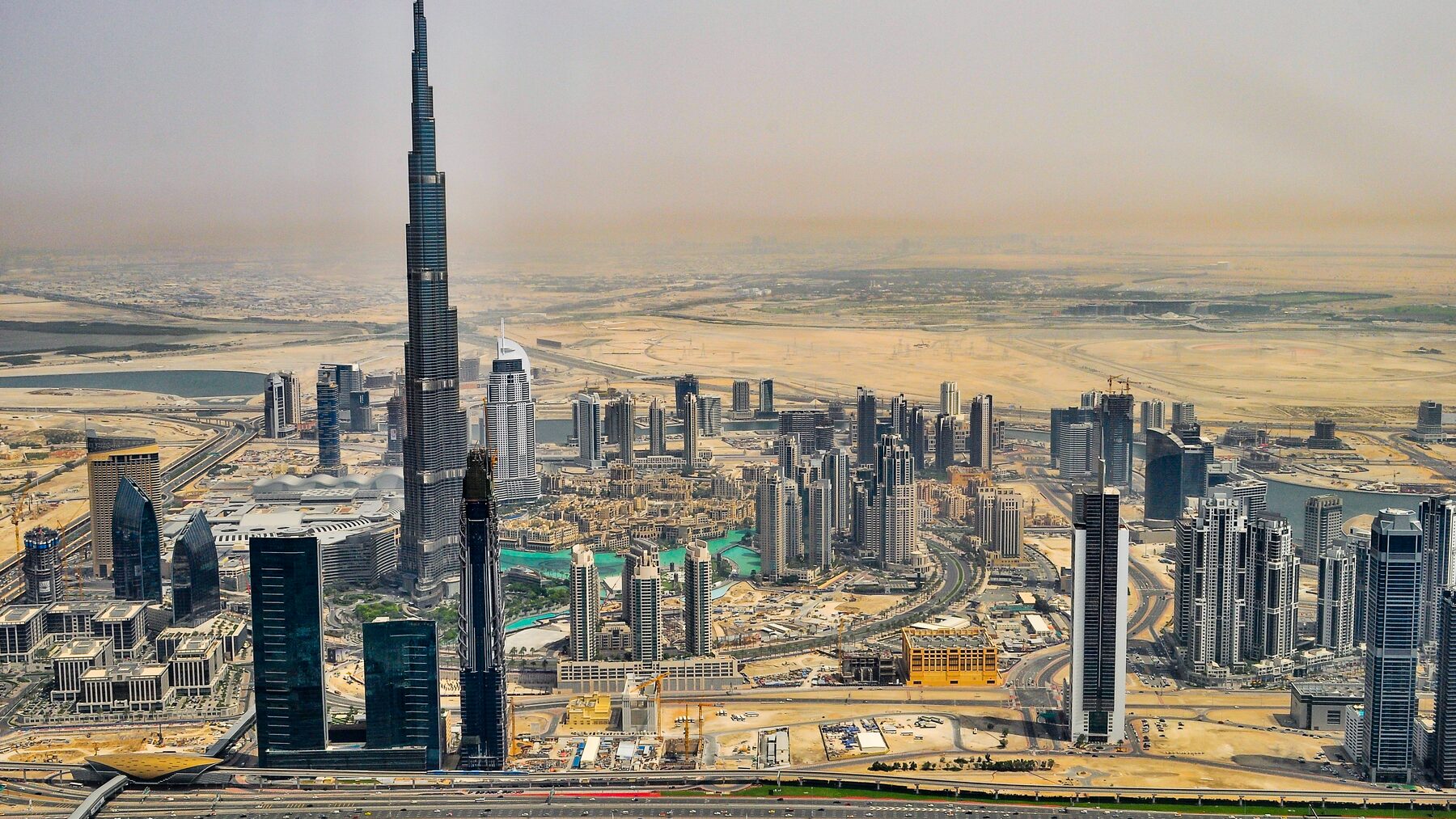
Who Built Them
| Developer | Projects | Homes |
|---|---|---|
| Deyaar Development | 3 | 7,610 |
| Select Global Development | 4 | 5,360 |
| Dubai Hills Estate | 4 | 4,352 |
| Sobha | 3 | 3,931 |
| The Lagoons Phase One | 2 | 3,466 |
| Island Oasis Properties | 6 | 2,663 |
| HRE Real Estate Development | 1 | 2,319 |
| Citywalk Residential | 4 | 1,801 |
| Tiger Properties | 3 | 1,672 |
| Binghatti Developers | 2 | 1,635 |
Ten developers account for a little over half the homes in the batch. The rest is a long tail of smaller names — which is healthy. A completion pipeline concentrated in three or four developers is a market with three or four points of failure.
The Arithmetic, Taken Apart
Now the caveats, because the eleven-to-one figure is a headline and not a finding.
This extract is not the whole market. It is 137 completed projects from the DLD register, not every home delivered in Dubai this year. The true city-wide completion figure is higher, and the true ratio of arrivals to homes is therefore lower than eleven.
People do not live one per home. A household is typically three or four people. Even taken at face value, 68,416 homes house perhaps 200,000 to 270,000 people — still well short of 750,000, but not by a factor of eleven.
Not every arrival buys or rents a new build. Many move into existing stock, shared accommodation, or company housing. New completions serve the top of the demand curve, not all of it.
And handover is not occupancy. A finished project takes months to fill.
So the honest version is narrower than the headline, and still points the same way: this batch of completions, worth AED 28.5 billion, does not on its own house one year of Dubai's population growth. Whatever the precise multiple, demand is running ahead of delivered supply, and it has been for several years.
What This Means If You Are Buying to Live
Speed matters more than it should. In a market where arrivals outpace completions, the well-priced unit in a good building is not there next month. This is not a sales line — it is what an 18.6% population increase does to a viewing list.
Buy the district, not just the unit. The table above is a map of where your future neighbours, schools and supermarkets are being built. A home in a district receiving 7,000 new residences will feel different in three years, in both directions: more amenities, more competition on resale.
Ask when the building actually finished. A 2026 completion in this register has been inspected and signed off. That is a materially different proposition from an off-plan unit with a 2028 handover date, and it should be priced differently.
What This Means If You Are Investing
Rental demand has a floor under it. You do not need a view on sentiment to underwrite a Dubai tenancy in 2026; you need the migration number. Three quarters of a million people arrived and all of them slept somewhere.
Mid-market absorbs fastest. The JVC pattern — many small projects, continuous delivery, mid-market pricing — is where the volume of new arrivals actually lands. Prime and ultra-prime are a different market with different drivers.
Watch the 2027 and 2028 pipeline, not the 2026 one. Today's completions were commissioned in 2022–2024. The projects that answer today's population will hand over in two to three years. If launches now are not keeping pace with arrivals now, the squeeze extends.
Yield compresses before prices correct. When supply finally catches up, rents flatten before capital values do. The projects breaking ground this year are the leading indicator worth tracking.
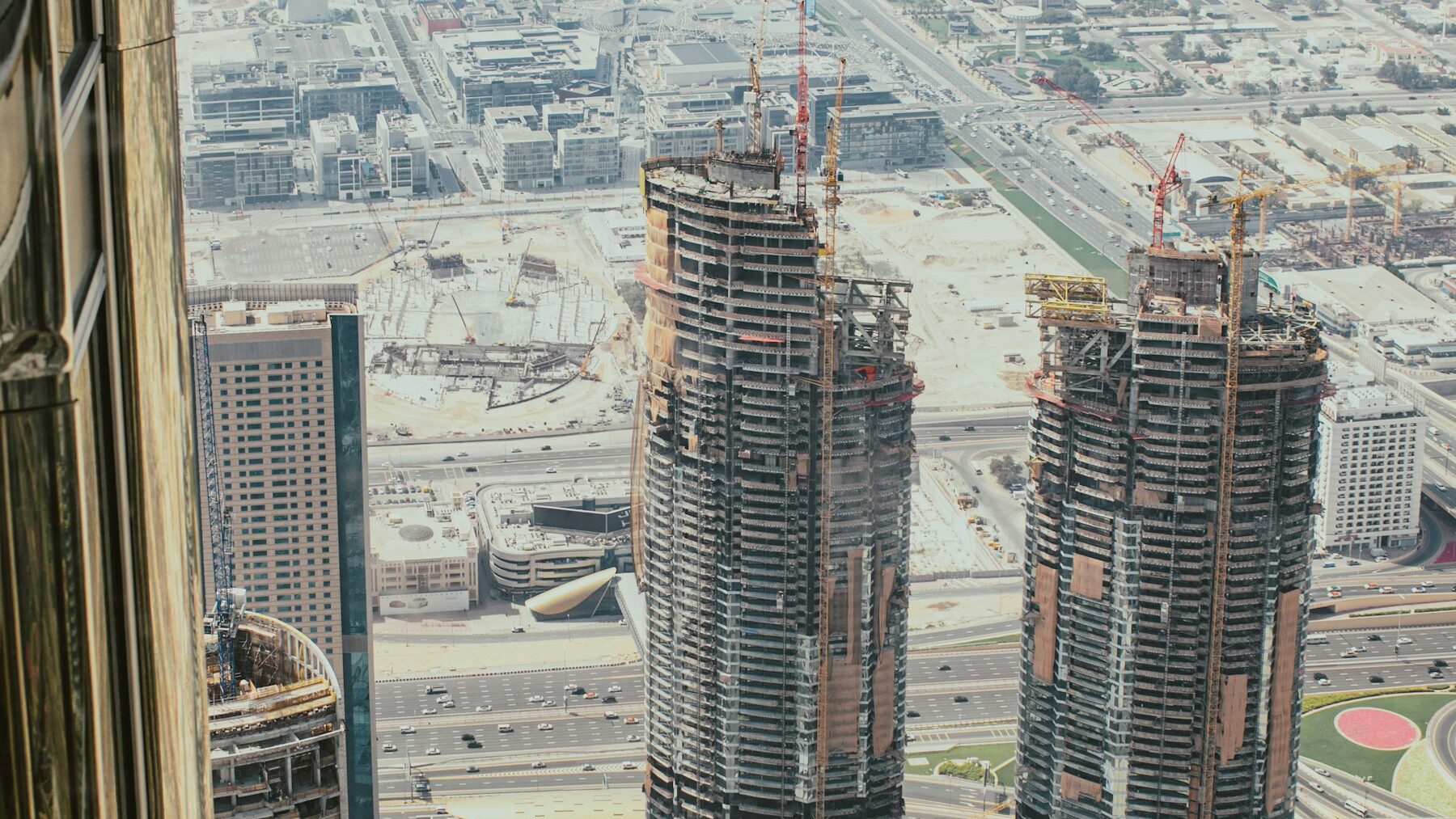
The Short Version
Dubai added roughly 750,000 residents in a year. A batch of 137 projects worth AED 28.5 billion finished construction and delivered 68,416 homes. Those two numbers are not in balance, and they have not been in balance for some time.
Population data tells you demand is coming. Completion data tells you what is ready to meet it. Read them together and the Dubai market stops looking like a matter of opinion and starts looking like a matter of arithmetic.
---
Project figures in this article are taken from a Dubai Land Department extract of 137 completed projects, dated 8 September 2026. It is a sample of DLD's completed-project register, not a complete record of every home delivered in Dubai. Population figures are as reported for August 2026. Prices, availability and handover dates change — confirm current figures with our team before making a decision.
Frequently Asked Questions
01What is Dubai's population in 2026?
As of August 2026 Dubai's population stands at 4,787,277, an 18.6% increase on the 4,036,863 recorded in August 2025. That is roughly 750,414 additional residents in a single year. For context, the emirate counted 1.93 million people in 2011, and the growth is not mostly demographic but net migration.
02How many new homes were completed in Dubai in 2026?
The Dubai Land Department extract behind this article covers 137 completed projects, all recorded as finished, inspected and closed in the DLD register. Between them they delivered 68,416 homes, made up of 59,922 apartments and units and 8,494 villas and townhouses, with a combined project value of AED 28.5 billion.
03Is there really a shortage of eleven new residents for every completed home?
That figure is a headline, not a finding, and it overstates the gap. The extract is 137 completed projects rather than every home delivered in Dubai, so the true ratio is lower. People do not live one per home either, as a household is typically three or four people, so 68,416 homes house perhaps 200,000 to 270,000 people. Not every arrival buys or rents a new build, and handover is not occupancy. The honest version is narrower: this batch of completions does not on its own house one year of Dubai's population growth.
04Which Dubai districts received the most new homes?
Business Bay led with 7,353 homes from just six projects, an average of over 1,200 each, because the economics of expensive central land only work at height and density. JVC, recorded as Al Barsha South Fourth, produced almost the same number at 7,316 but from twenty-five projects, around 290 homes each. MBR City and Dubai Hills followed with 5,930. The single largest project in the batch, JANNAT in the Production City area, delivered 5,302 homes on its own.
05Which developers delivered the most homes?
Deyaar Development led with 7,610 homes from three projects, followed by Select Global Development with 5,360 from four, Dubai Hills Estate with 4,352 from four and Sobha with 3,931 from three. Ten developers account for a little over half the homes in the batch, and the rest is a long tail of smaller names, which is healthy, because a completion pipeline concentrated in three or four developers is a market with three or four points of failure.
06Why is Dubai's population growing this fast?
Four forces do most of the work and they compound. Work, as the business ecosystem keeps widening across finance, logistics, technology and tourism. Tax and ownership, with no personal income tax, full foreign ownership in the free zones and a visa framework built to keep talent in place, the Golden Visa in particular turning property from a trade into a residency decision. Daily life, with healthcare, schools and transport at a standard that lets a family move without downgrading. And momentum left behind by EXPO 2020 and the mega-projects that followed.
07What does the supply gap mean for investors?
Rental demand has a floor under it, because three quarters of a million people arrived and all of them slept somewhere. Mid-market absorbs fastest, and the JVC pattern of many small projects delivering continuously is where the volume of new arrivals actually lands. Watch the 2027 and 2028 pipeline rather than the 2026 one, because today's completions were commissioned in 2022 to 2024. And note that yield compresses before prices correct, so rents flatten before capital values do.