The most important sentence in this guide is the one buyers least want to hear: Dubai law does not provide automatic compensation for a late handover. There is no statutory penalty that accrues per month of delay, no fixed percentage you are entitled to, and no provision that converts a missed date into a refund.
What you have instead is a sequence of four things, used in order: the delay clause in your own contract, the escrow rules that protect the money, the regulator's complaint and cancellation machinery, and a specialist tribunal with power to order your money back out of the escrow account. They are real and they work. They are just not what most buyers think they are.
This guide sets out what each one actually gives you, and corrects the single most common piece of misinformation circulating about delayed Dubai projects.
The Myth: Article 11 Does Not Help a Delayed Buyer
If you search for your rights after a delay, you will be shown Article 11 of Law No. 13 of 2008 regulating the Interim Real Property Register, as amended by Law No. 19 of 2017, usually with a table of percentages. That article is quoted at delayed buyers constantly, and it is the wrong article.
Article 11 governs the opposite situation: what a developer may do when a purchaser stops paying. It is a developer remedy, not a buyer one. Its percentages describe what the developer keeps when the buyer defaults.
| Project completion | What the developer may do under Article 11 |
|---|---|
| Over 80% | Keep the contract alive and claim the balance, or ask the DLD to sell the unit at public auction, or terminate and retain up to 40% of the unit value |
| 60% to 80% | Terminate and retain up to 40% of the unit value |
| Under 60%, work commenced | Terminate and retain up to 25% of the unit value |
| Work not commenced, through no fault of the developer | Terminate and retain up to 30% of the amounts paid |
The procedure matters as much as the percentages. The developer must notify the Dubai Land Department with the details of the breach, the DLD serves the purchaser written notice to perform within thirty days and will attempt to mediate a settlement first, and any amount above the retained share must be refunded within one year of termination or sixty days of resale, whichever comes first.
Useful to know if you are the one who fell behind on payments. Irrelevant to a late handover. If an adviser cites Article 11 as the basis of your delay claim, they have misread it.
What You Actually Have, in Order
First: your own SPA
Your Sale and Purchase Agreement is the primary source of any delay remedy, because statute does not supply one. Two clauses decide almost everything.
The Anticipated Completion Date and its grace period. Nearly every Dubai SPA grants the developer an extension beyond the anticipated date — commonly six to twelve months — during which a delay triggers no penalty, no cancellation right and no compensation. A project that is four months late is usually not, in contractual terms, late at all. Find this clause and count from the end of the grace period, not from the date in the brochure.
The delay or termination clause. Some SPAs provide a stated remedy once the grace period expires: a defined penalty, an interest rate on sums paid, or a right to terminate and be refunded. Many provide none at all. Which of those you signed is the single biggest determinant of your position, and it was decided on the day you signed rather than on the day the project ran late.
Second: the escrow account
Every Dubai off-plan project must operate a project escrow account into which buyer payments are deposited, under the escrow law. The practical significance for a delayed buyer is that your money is not the developer's general working capital — it sits in a regulated account tied to your project, and both the regulator and the tribunal below have powers over it. Escrow is what makes a refund a realistic outcome rather than a paper judgment against an empty company.
Third: the DLD and RERA complaint route
The Land Department can investigate the developer, examine escrow records and unjustified delays, and refer the developer onward for action. Two outcomes are worth understanding.
RERA may grant the project an extension where the delay has a cause it accepts. Or RERA may cancel the project, and that is the decisive one: where a project is cancelled by a final decision of the regulator, the developer must refund all payments made by purchasers in accordance with the escrow rules. Cancellation converts a stalled project into a refund obligation.
Fourth: the Special Tribunal under Decree No. 33 of 2020
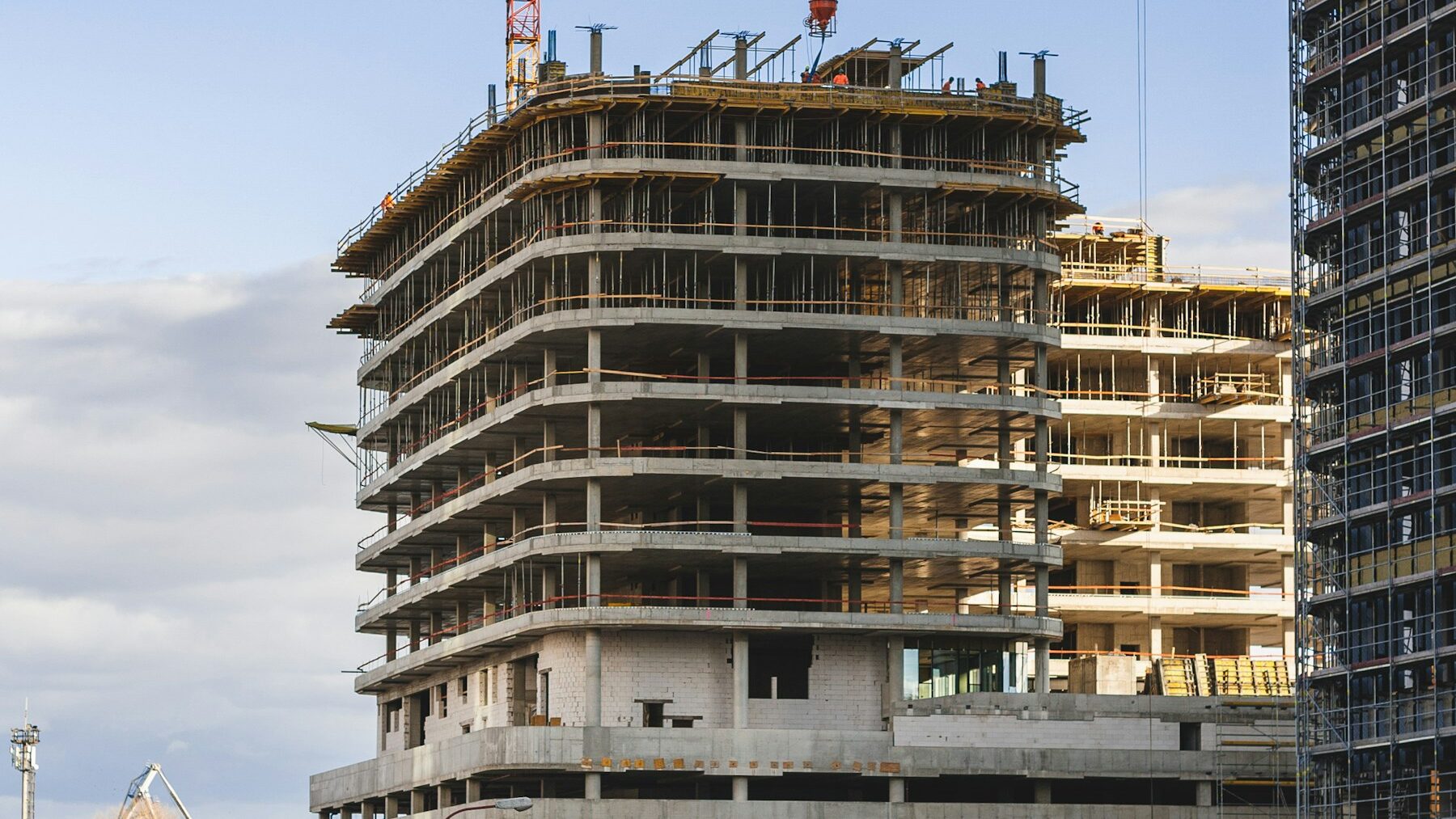
This is the mechanism most delayed buyers have never heard of, and for a stalled or cancelled project it is the most powerful one available.
Decree No. (33) of 2020 established the Special Tribunal for Unfinished and Cancelled Real Property Projects in the Emirate of Dubai, with its head office at the Land Department. Its features matter:
- Jurisdiction (Article 4) covers unfinished projects where construction has been suspended for any reason, cancelled projects, claims by purchasers and developers relating to them, projects referred by RERA for reassignment to a new developer, and developer grievances against a RERA cancellation. Projects inside the DIFC are excluded.
- Power over the money (Article 7) includes issuing orders to the escrow agent or the developer, including the refund of amounts deposited in the escrow account, and appointing auditors to verify what was paid in and what was spent.
- Finality (Article 11): its awards, orders and decisions are definitive and not subject to ordinary appeal.
- No judicial fees (Article 13): applications to the Tribunal are exempt from court fees, which removes the usual cost barrier to pursuing a claim.
- Consolidation (Article 10): courts refer pending cases within its remit to the Tribunal.
A fee-free forum with direct authority over the escrow account and final decisions is a strong remedy. It is also a remedy aimed at unfinished and cancelled projects — not at a project that is progressing and simply running behind.
And underneath all of it: the Civil Code
Where the contract is silent, general contract law still applies. Article 246 of the Civil Transactions Law requires contracts to be performed in accordance with their terms and in good faith, extending obligations to what law, custom and the nature of the transaction require. Article 272 allows a party facing non-performance to ask the court to compel performance or to rescind the contract. Damages and any interest are matters for the court's assessment rather than a fixed entitlement, which is why a well-drafted delay clause is worth far more than a general legal right.
What to Do, and in What Order
Establish whether you are legally late. Read the SPA for the Anticipated Completion Date and the grace period, then count. Until the grace period expires you generally have no contractual remedy, however frustrating that is.
Check the project's regulatory status. Confirm with the Land Department whether the project is registered, active, extended, on hold or cancelled, and confirm the escrow account is in place. Status determines which route is open to you, and a buyer who skips this step frequently pursues the wrong one.
Write to the developer formally, and keep the record. A dated written notice referring to the SPA clause and requesting a revised completion date does two things: it sometimes produces a settlement, and it builds the evidential record every later route will ask for. Keep the SPA, the Oqood registration, every receipt and every piece of correspondence.
Then pick the route that matches the situation. A project that is progressing but late is a contract matter with the developer, escalated through the DLD. A project that has stalled, or that the regulator has cancelled, belongs in front of the Special Tribunal, where the fees are nil and the orders reach the escrow account.

How to Not Be Here Next Time
Everything above is damage control. The diligence that avoids it is short.
Read the grace period before you sign. It is the one clause that determines how long a delay has to run before you have any rights at all, and it is negotiable at reservation far more often than buyers assume.
Ask what the delay clause actually says. An SPA with a defined remedy after the grace period is a materially different product from one without, and the difference is invisible in a brochure.
Check the developer's delivery record rather than its marketing. Past handover performance across completed projects is the best available predictor, and it is public information in the transaction record.
Confirm escrow and project registration before any payment. Both are verifiable with the Land Department, and a project that cannot satisfy either is not a project you have a dispute with — it is one you should not have paid into.
| Situation | Your realistic route |
|---|---|
| Late but still inside the SPA grace period | No remedy yet. Document everything and track progress. |
| Past the grace period, project still building | SPA delay clause, then DLD complaint and mediation |
| Construction suspended or project stalled | Special Tribunal under Decree 33 of 2020 |
| Project cancelled by RERA | Refund of all payments through the escrow rules, enforced by the Tribunal |
| You stopped paying and the developer served notice | Article 11 procedure — thirty days to perform, then the retention bands |
Frequently Asked Questions
Is there automatic compensation for a late handover in Dubai?
No. Dubai law contains no statutory late-delivery penalty that accrues per month, no fixed compensation percentage and no provision converting a missed date into an automatic refund. Any monetary remedy for delay comes from the delay clause in your own Sale and Purchase Agreement, or from a court or tribunal assessing damages. This is why the contract wording matters far more than general legal rights.
How long can a Dubai developer legally delay a handover?
For as long as the grace period in your SPA allows, which is commonly six to twelve months beyond the Anticipated Completion Date. Inside that window a delay triggers no penalty, no cancellation right and no compensation, so the practical starting point for any claim is the date the grace period expires rather than the date originally advertised.
Does Article 11 of Law 13 of 2008 apply to developer delays?
No, and this is the most common misunderstanding in delayed-project advice. Article 11, as amended by Law No. 19 of 2017, governs what a developer may do when a purchaser fails to pay. Its percentage bands describe what the developer retains on a buyer default. It gives a buyer facing a late handover nothing, and an adviser relying on it has misread the provision.
Can I get a full refund if my Dubai off-plan project is cancelled?
Yes. Where a project is cancelled by a final decision of RERA, the developer must refund all payments made by purchasers in accordance with the escrow account rules. The Special Tribunal established by Decree No. 33 of 2020 has express power to order the escrow agent or the developer to refund amounts held in the project escrow account, which is what makes the obligation enforceable in practice.
What is the Special Tribunal for cancelled real estate projects?
It is the body created by Dubai Decree No. (33) of 2020, headquartered at the Land Department, with jurisdiction over unfinished and cancelled real property projects in Dubai and the disputes arising from them. It can order refunds from escrow, appoint auditors over project funds, and reassign projects to new developers. Its decisions are final and not subject to ordinary appeal, and applications to it are exempt from judicial fees.
Does the Special Tribunal cover DIFC projects?
No. Article 4 of Decree No. 33 of 2020 expressly excludes real property projects located within the boundaries of the Dubai International Financial Centre. A dispute over a project inside the DIFC follows that centre's own legal framework rather than the Tribunal's.
What should I do first when my Dubai handover is delayed?
Read the SPA and work out whether the grace period has actually expired, because until it has you generally have no remedy. Then confirm the project's registration and escrow status with the Land Department, and send the developer a dated written notice requesting a revised completion date. Those three steps determine which route is open to you and build the record every later route will require.
Can I cancel my Dubai off-plan purchase because of a delay?
Sometimes, and it depends on your contract. Where the SPA grants a termination right once the grace period expires, you may exercise it on its terms. Where it does not, cancellation generally requires a court or the Special Tribunal, and the outcome turns on how far the project has progressed and why it is late. Stopping payments unilaterally is the one thing not to do, because that puts you in default and exposes you to the Article 11 retention bands.
How do I check whether a Dubai project is cancelled or on hold?
Through the Dubai Land Department, which maintains the registration and status of off-plan projects and oversees the escrow accounts attached to them. Project status determines your route entirely — an active project that is late is a contract dispute, while a suspended or cancelled one belongs before the Special Tribunal — so confirming status should precede any decision about how to proceed.
Where This Leaves a Buyer
A delayed handover in Dubai is rarely hopeless and rarely as simple as the headlines suggest. The regulatory architecture here — mandatory project escrow, a regulator that can cancel a project and trigger refunds, and a fee-free tribunal with direct authority over the escrow account — is genuinely among the stronger buyer-protection frameworks in the region.
What it does not do is hand you money for lateness. That part was decided by the clause you signed.
If your handover has passed its date, the useful first step is a reading of your SPA against the project's current regulatory status, so you know whether you are in a waiting period, a contract dispute or a tribunal matter. Our team can review the contract and the project status and set out the realistic options before you commit to a route.