Most Dubai area guides open with lifestyle and get to ownership somewhere near the end. Al Barsha has to be done the other way round, because in Al Barsha the ownership question decides which half of the district you are even allowed to consider.
Five separate districts share the name: Al Barsha 1, Al Barsha 2, Al Barsha 3, Al Barsha South and Barsha Heights. They are not variations on a theme. They differ in building type, in price, in who lives there and, critically, in whether a non-UAE national can hold title at all.
Start With the Instrument, Not the Listings
Foreign freehold in Dubai is granted by area, and the areas are named in the schedule to Regulation No. 3 of 2006, issued by Mohammed bin Rashid Al Maktoum, Ruler of Dubai, on 7 June 2006. That schedule designates land plots, not neighbourhoods.
For the whole of Al Barsha it designates two:
| Area | Plots designated |
|---|---|
| Al Barsha South 2 | 002 |
| Al Barsha South 3 | 002 |
That is the entire footprint in which a non-UAE national may acquire freehold ownership without time restriction in Al Barsha under the 2006 regulation. Everything else carrying the name sits outside it.
The practical consequences are sharp:
- Al Barsha 1, 2 and 3 — the villa districts, and the older low-rise apartment blocks behind Mall of the Emirates — are outside the designated areas. The stock there is held by UAE and GCC nationals, and for everyone else it is a rental market rather than a purchase market.
- Al Barsha South is where foreign buyers actually transact, and the designation attaches to specific plots inside it rather than to the district as a label.
- Barsha Heights, the TECOM Group tower district on Sheikh Zayed Road, is a separate case again. It is not in the 2006 schedule, and what is available there varies building by building. Some towers are registered for ownership by all nationalities and some are not.
The rule that follows from all of this is simple. In Al Barsha, do not take tenure from a portal listing or an agency brochure. Take it from the title deed, or from a Dubai Land Department search against the specific plot and building, before you pay a deposit. This is the one district in Dubai where "it is freehold" is a statement that is wrong roughly half the time.
The Five Districts
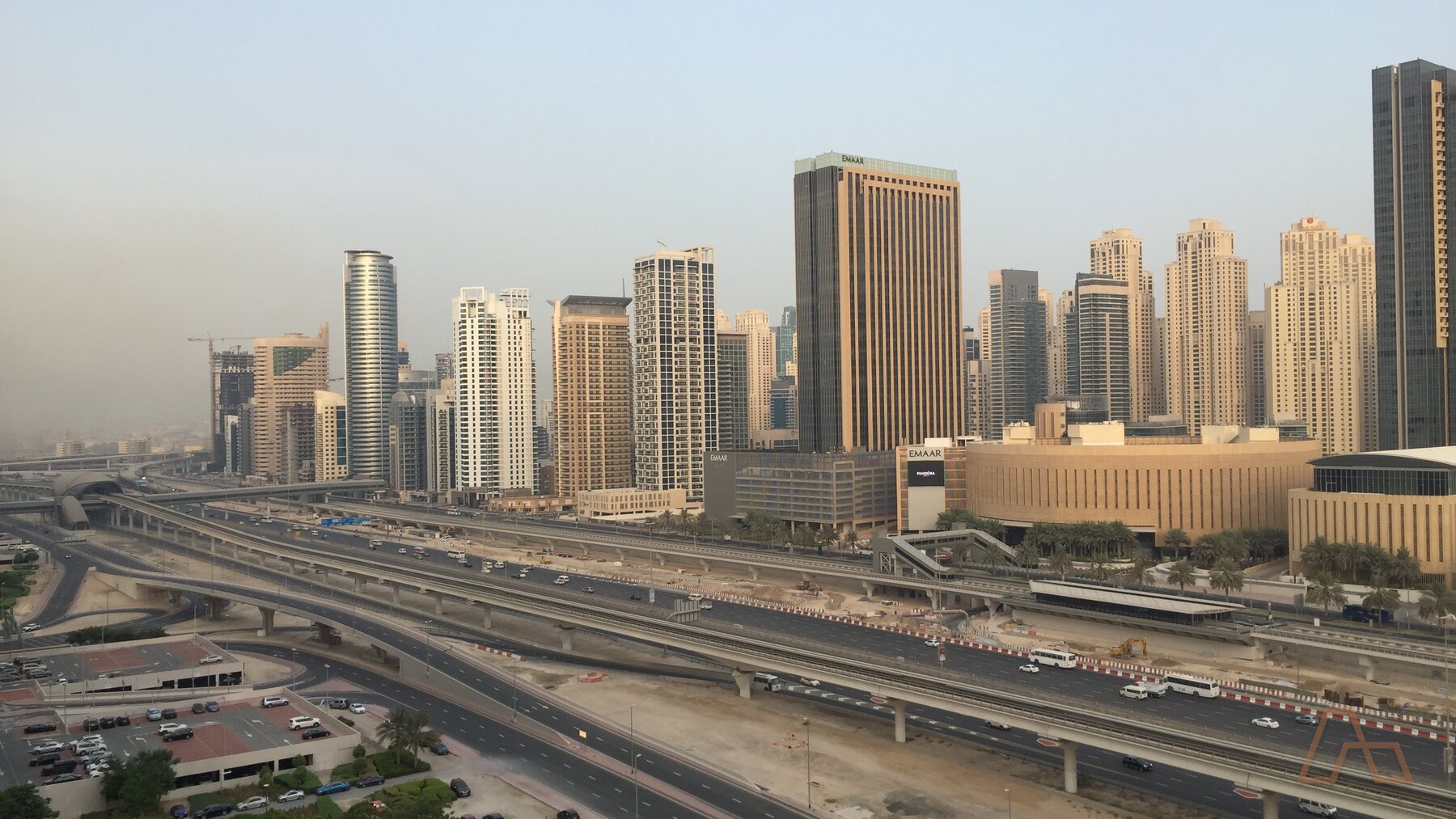
Al Barsha 1 is the dense one. It holds Mall of the Emirates, the Mall of the Emirates metro station on the Red Line, a large concentration of mid-rise apartment buildings, hotels, and the schools that give the district its reputation. It is the most walkable part of Al Barsha and the most congested.
Al Barsha 2 is quieter and largely villas, with Kings' School Al Barsha inside it. Streets are wide, plots are generous and the housing is older than the marketing photography of newer communities suggests.
Al Barsha 3 is the largest villa district, running back from Sheikh Zayed Road, with the Saudi German Hospital and a mix of family villas and compound stock. It is where a lot of long-term Dubai families actually live.
Al Barsha South is the newer, denser, apartment-led extension inland, numbered South 1 to South 5. It runs up against Arjan and Dubai Science Park, and it is the only part of Al Barsha where a non-UAE national can realistically buy. It is also car-dependent in a way the rest of the district is not.
Barsha Heights (long known as TECOM) is a tower district between Al Barsha and The Greens, developed and managed by TECOM Group, part of Dubai Holding. It has its own metro station at Sharaf DG, a studio-and-one-bedroom-heavy stock, and the strongest yields in the wider area.
What It Costs to Buy
Realistic 2026 bands for the stock a foreign buyer can actually acquire, which in practice means Al Barsha South and selected Barsha Heights towers.
| Unit type | Typical purchase price | Typical annual rent |
|---|---|---|
| Studio | AED 480,000 to 750,000 | AED 38,000 to 55,000 |
| One bedroom | AED 700,000 to 1,200,000 | AED 55,000 to 80,000 |
| Two bedroom | AED 1,150,000 to 1,800,000 | AED 80,000 to 120,000 |
| Three bedroom apartment | AED 1,700,000 to 2,600,000 | AED 120,000 to 165,000 |
Price per square foot in Al Barsha South generally runs AED 650 to AED 1,050, which is the district's real argument: it is inside the Sheikh Zayed Road belt at outer-community pricing.
Gross yields land between 6% and 7.5% on long lets, with Barsha Heights studios at the top of that range and larger Al Barsha South apartments at the bottom. That is a genuinely strong yield for a location this central, and it is the reason the district gets bought by investors who never intend to live in it.
What It Costs to Rent
This is the number that matters to most people reading about Al Barsha, because most people in Al Barsha are tenants.
| Property | Typical annual rent |
|---|---|
| Studio apartment | AED 38,000 to 59,000 |
| One bedroom apartment | AED 55,000 to 86,000 |
| Two bedroom apartment | AED 80,000 to 145,000 |
| Three bedroom villa | AED 180,000 to 230,000 |
| Four bedroom villa | AED 200,000 to 300,000 |
| Five bedroom and larger villa | AED 260,000 to 480,000 |
The villa range is wide because the stock is wide. Al Barsha villas run from genuinely old low-specification houses to renovated family compounds, and two properties on the same street can be AED 100,000 apart on condition alone. Viewings matter here more than in a masterplanned community where every unit of a type is identical.
Why People Choose It
The schools. This is the single biggest driver, and it is not marketing. Al Barsha 1 and 2 hold the American School of Dubai, GEMS Dubai American Academy and Kings' School Al Barsha, with Dubai National School and Al Mawakeb nearby. Families who get a place at one of those schools frequently rent in Al Barsha for the simple reason that the school run becomes a five-minute drive instead of a forty-minute one. The premium is real and it is paid in rent.
The metro and the road. Mall of the Emirates station puts Al Barsha 1 on the Red Line, and Sharaf DG station does the same for Barsha Heights. Sheikh Zayed Road access is immediate in both directions. For a household where one person works in Media City and the other in Business Bay, there is no better compromise postcode in the city.
Mall of the Emirates. Supermarket, cinema, ski slope, clinics and the rest of it, within a short drive or walk of most of the district, rather than a weekend expedition.
Healthcare. The Saudi German Hospital in Al Barsha 3 and a dense band of clinics along the arterial roads.
Al Barsha Pond Park. A proper public park with a running loop, which inland Dubai is generally short of.
The Honest Trade-Offs
You probably cannot buy the part you want. It bears repeating because it is the district's defining feature. The villa streets are not available to most foreign buyers, and the part that is available is apartments inland.
The apartment stock is uneven. Al Barsha 1 and Al Barsha South contain some very well-run buildings and some poorly managed ones, with service charges and maintenance standards to match. Get the Mollak service charge statement for the specific building and ask what the owners association has actually spent on it.
Parking is the daily friction. Al Barsha 1 was not built for current car ownership. Many older buildings allocate one bay per apartment or none at all, and street parking around the schools and the mall is contested. Confirm the parking allocation in writing.
Al Barsha South needs a car. There is no metro station in it. The nearest are Mall of the Emirates and Dubai Internet City, and neither is walkable from most of South 2 to South 5.
Construction continues inland. The South districts and the Arjan edge beyond them are still being built out, which means noise, dust and changing views on a multi-year horizon.
It is not a new-build district. If the expectation is a 2024 tower with a rooftop infinity pool, Al Barsha will disappoint. If the expectation is a location that already works, it will not.
Who Al Barsha Suits
It suits families chasing a specific school better than almost anywhere in Dubai, and that is the honest reason the district is full.
It suits yield investors well, through Al Barsha South and Barsha Heights. A 6.5% to 7.5% gross on a Sheikh Zayed Road location with permanent tenant demand from schools, hospitals and offices is a defensible position.
It suits tenants who want central without paying Marina or Downtown rents. The arithmetic works: the same budget buys a materially larger apartment here.
It suits UAE and GCC national buyers who want a large villa plot on the inside of the city, and for that group Al Barsha 2 and 3 are among the strongest value in Dubai.
It suits foreign buyers who want a villa very poorly, because the stock they are picturing is not for sale to them.
It suits short-let operators moderately. The schools and hospitals produce medium-stay demand rather than tourist demand, and the district has none of the beach or landmark pull that drives nightly rates elsewhere.
The Bottom Line
Al Barsha is a reminder that a Dubai district and a Dubai investment opportunity are not the same thing. The part of Al Barsha that people want to live in is largely not purchasable by non-UAE nationals, and the part that is purchasable is a solid, high-yield, car-dependent apartment market inland.
Both of those are useful facts. Confusing them is what produces a buyer who has spent three weeks viewing villas they were never eligible to own.
Check the plot against the 2006 schedule, check the title deed, and then decide which Al Barsha you are actually in the market for. Our team holds the tenure and service charge position for the buildings in Al Barsha South and Barsha Heights. Ask before you offer.
This is general information about a Dubai district, not legal, tax or investment advice. Price and rent bands are indicative of the 2026 market and vary by building, floor, condition and view. Freehold designations attach to specific land plots and are amended from time to time, so confirm tenure against the title deed and a Dubai Land Department search for the specific property before committing.
Frequently Asked Questions
01Is Al Barsha freehold for foreign buyers?
Only in part. The schedule to Regulation No. 3 of 2006 designates two plots in Al Barsha for ownership by non-UAE nationals: Al Barsha South 2 plot 002 and Al Barsha South 3 plot 002. The villa districts of Al Barsha 1, 2 and 3 sit outside the designated areas, so foreign buyers cannot take freehold title there, and Barsha Heights varies tower by tower. Confirm tenure against the title deed and a Dubai Land Department search on the specific property rather than a portal listing.
02Can expats buy a villa in Al Barsha?
Generally no. The large villa stock in Al Barsha 1, 2 and 3 is outside Dubai's designated freehold areas and is held by UAE and GCC nationals, which is why expat families in those streets are almost always tenants. Foreign buyers who want to own in Al Barsha are buying apartments in Al Barsha South, or in selected Barsha Heights towers where ownership has been opened to all nationalities.
03What rental yield does Al Barsha produce?
Gross yields on long lets typically run 6% to 7.5%, with Barsha Heights studios and small one-bedrooms at the top of that range and larger Al Barsha South apartments at the bottom. That is strong for a location inside the Sheikh Zayed Road belt, and it reflects permanent tenant demand from the schools, the hospital and the surrounding office districts rather than any speculative premium.
04Which schools are in Al Barsha?
The district's school concentration is the main reason families live there. The American School of Dubai and GEMS Dubai American Academy are in Al Barsha 1, Kings' School Al Barsha is in Al Barsha 2, and Dubai National School and Al Mawakeb are close by. Families who secure a place at one of these frequently rent in Al Barsha purely to shorten the school run, and that demand holds rents up across the district.
05Is Al Barsha near a metro station?
Al Barsha 1 is served by Mall of the Emirates station on the Red Line and Barsha Heights by Sharaf DG station, both within walking distance of much of their stock. Al Barsha 2, Al Barsha 3 and Al Barsha South have no station of their own, and Al Barsha South in particular is car-dependent, with Mall of the Emirates and Dubai Internet City the nearest options and neither within walking range.
06How much is rent in Al Barsha?
In the 2026 market, studios typically run AED 38,000 to 59,000 a year, one-bedroom apartments AED 55,000 to 86,000, and two-bedroom apartments AED 80,000 to 145,000. Villas range widely on condition, from around AED 180,000 for a three-bedroom to AED 480,000 for a large five-bedroom or bigger. The villa spread is wide because the stock runs from unrenovated older houses to fully upgraded family compounds on the same streets.