Air conditioning is not a utility in Dubai so much as a third rent. In a district cooling building it arrives as its own bill, from a company most buyers have never heard of until the first statement lands, and it is the single most common reason a carefully modelled net yield turns out wrong.
The short version is this. In a chiller-paid building you pay two separate charges: a fixed capacity charge you owe whether or not the air conditioning ever runs, and a consumption charge for the cooling you actually use. The fixed half is the one that catches people. It is set by the cooling tonnage allocated to your apartment, not by your behaviour, and it continues through an empty summer.
What almost nobody tells a buyer is that both charges are capped. Dubai's Regulatory and Supervisory Bureau for the Electricity and Water Sector regulates district cooling under Executive Council Resolution No. 6 of 2021, and its tariff regulation sets out an exhaustive list of what a provider may bill and the ceiling on each item. Anything outside that list is not a charge. It is a violation, and the fine for it is AED 100,000.
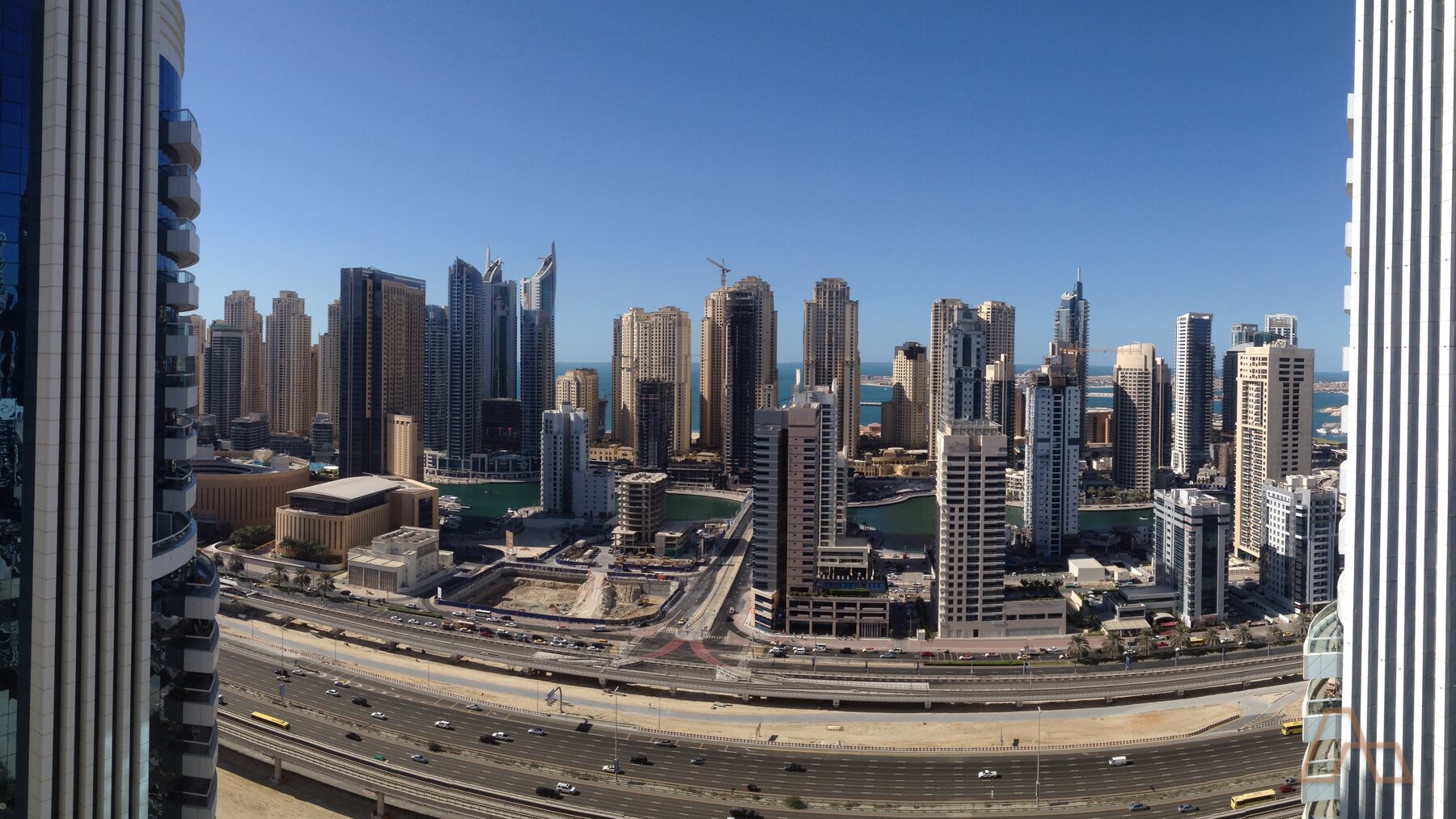
The Two Charges
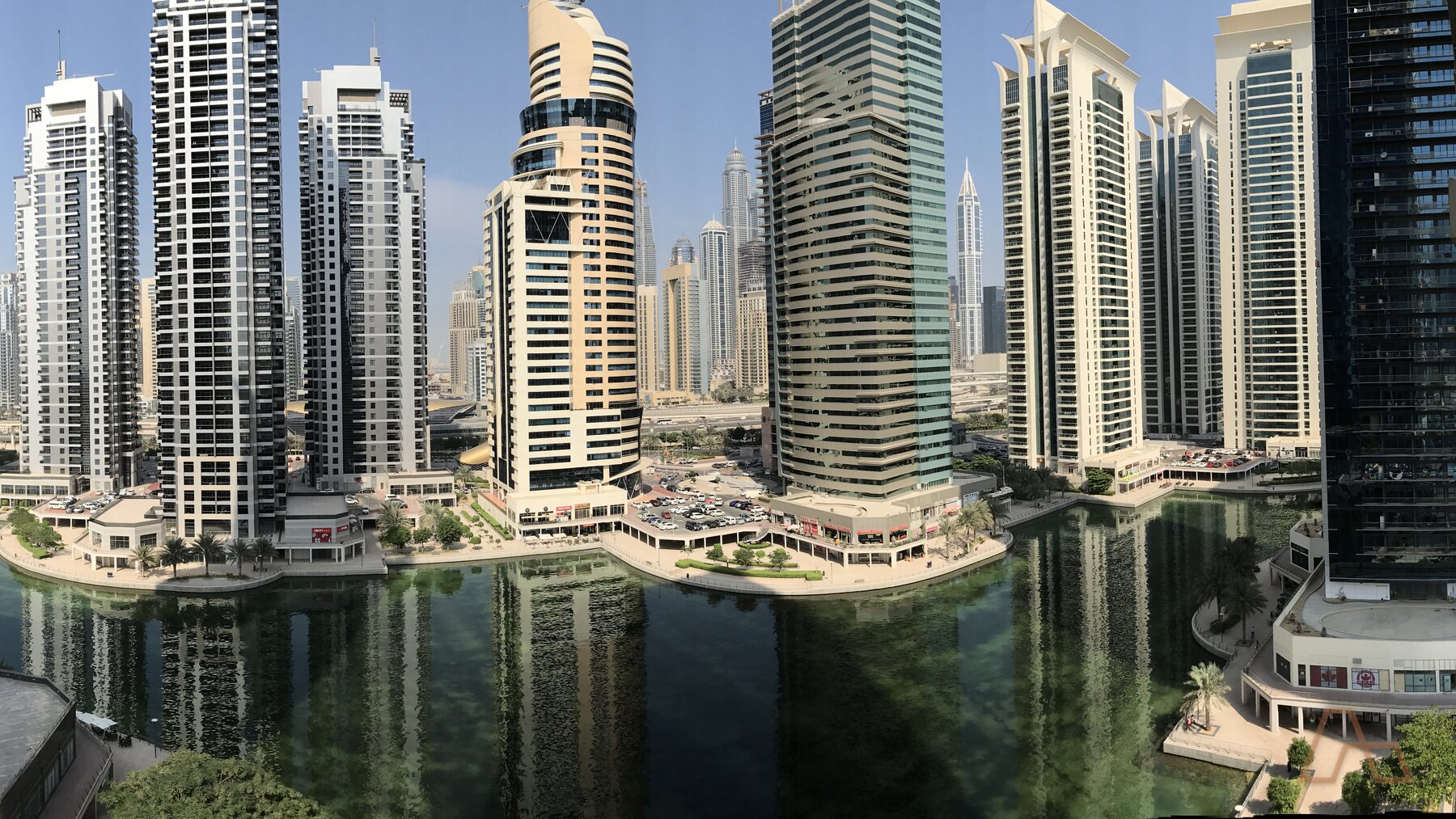
A district cooling provider — Empower in most of Downtown, Business Bay, Dubai Marina, Jumeirah Lake Towers and the Greens, Emicool across Dubai Investment Park, Motor City and parts of Dubailand, Tabreed in several master communities — sells cooling the way a landlord sells floor area. You contract for a capacity, measured in refrigeration tons, and you pay for the energy you draw through it, measured in refrigeration ton-hours.
| Charge | Unit | What drives it |
|---|---|---|
| Capacity charge | AED per refrigeration ton per year, billed monthly | Your unit's allocated share of the building's contracted capacity |
| Consumption charge | AED per refrigeration ton-hour | Metered cooling energy used |
| Fuel surcharge | AED per refrigeration ton-hour | Pass-through of DEWA electricity and water costs |
| Billing services fee | AED per month | The sub-metering and billing agent |
A refrigeration ton is roughly the cooling a 12,000 BTU per hour unit delivers. A studio is commonly allocated 2 to 3 tons, a one-bedroom 3 to 4, a two-bedroom 5 to 7, a large three-bedroom 8 to 12. That allocation is recorded in the building's cooling services agreement, and it is the number that decides your fixed charge for as long as you own the apartment.
What the Regulator Permits
This is the part worth printing out before you sign anything. The Bureau's tariff regulation lists every charge a permitted provider may apply, with its cap.
| Item | Cap |
|---|---|
| Consumption tariff, where a capacity tariff also applies | AED 0.643 per refrigeration ton-hour, inclusive of fuel surcharge |
| Consumption tariff, single-building cooling system | AED 0.80 per refrigeration ton-hour |
| Fuel surcharge | AED 0.075 per refrigeration ton-hour |
| Capacity tariff | Assessed and approved per system, listed in the provider's permit |
| Billing services fee | AED 30 per month |
| Activation fee | AED 200, once, for a new account at a unit |
| Re-connection fee | AED 500 for a unit |
| Late payment fee | AED 100 per billing cycle for a unit, and accumulated late fees may never exceed the outstanding balance |
| Security deposit | Equivalent of 8 months of capacity charges |
| Meter tampering penalty | Cost of repair plus 10% |
Several rules inside that schedule matter more than the numbers.
Capacity tariffs cannot escalate. The regulation states plainly that tariff arrangements including indexation or escalation of capacity charges will not be approved. A provider cannot build an annual uplift into your fixed charge.
Single-building systems carry no capacity charge at all. Where a tower runs its own plant and recovers cost through sub-metering, capacity charges are not allowed to be billed to units. If you are in a single-building system and your statement shows a fixed capacity line, question it.
Your capacity charge must match your allocated share, and nothing else. Providers are expressly prohibited from billing capacity above a unit's allocated share, from assigning capacity on the basis of installed equipment rather than proper allocation, and from allocating capacity between units inconsistently. Two identical apartments on the same floor should not carry different tonnage.
Low delta-T penalties are the building's problem, not yours. Where a building fails to achieve the designed temperature differential, the provider can levy an inefficient building penalty — but the regulation forbids passing it into unit bills under any circumstances. That charge belongs to the owners association.
Common area cooling cannot be billed to you directly. Capacity and consumption for common areas go to the provider's customer, meaning the building, and may not be redirected to occupants by the billing agent. Consumption for common areas can only reach you through the service charge, where it is visible and subject to the Mollak budget.
Your deposit comes back in five working days of the service concluding. That is a regulatory deadline, not a courtesy.

What It Actually Costs
Take a two-bedroom apartment of 1,200 square feet in a Business Bay tower on a district cooling system, allocated 6 refrigeration tons, with a capacity tariff of AED 750 per ton per year and a consumption tariff of AED 0.568 per ton-hour.
| Item | Calculation | Annual |
|---|---|---|
| Capacity charge | 6 tons at AED 750 | AED 4,500 |
| Consumption, occupied year-round | roughly 11,000 ton-hours at AED 0.568 | AED 6,250 |
| Billing services fee | AED 30 per month | AED 360 |
| Total | AED 11,110 |
Set that against the building's service charge. At AED 16 per square foot, the same apartment pays AED 19,200 a year to the owners association. The cooling bill is over half the size of the service charge, and it is almost never mentioned in the same breath. On a unit letting at AED 150,000, chiller costs are about 7.4% of gross rent.
Now empty the apartment for four months between tenants. Consumption drops to near nothing, but the capacity charge does not move: AED 1,500 of fixed cost accrues across a vacancy in which the unit earned nothing. Model that, not the occupied number, if you are buying to let.
Who Pays, and the Gap Where Arguments Start
The regulation governs what a provider may charge and how it must allocate. It does not decide, as between a landlord and a tenant, whose money settles the bill. That is a matter for the tenancy contract and local practice, and it is where most disputes originate.
Practice in Dubai runs as follows. In a chiller-paid building the tenant normally opens the account in their own name and pays both the consumption and the capacity charge for the duration of the tenancy. Between tenancies the account reverts to the owner, and the owner carries the capacity charge through the vacancy, because the charge attaches to capacity made available to the unit rather than to anybody's occupation of it. In a chiller-free building the cooling cost has been folded into the rent or the service charge by the owner, so the tenant sees no separate bill — "free" describes the absence of a bill, never the absence of a cost.
Three things follow for anyone signing a lease or an offer.
- Get the arrangement in writing. A tenancy contract that is silent on cooling is the beginning of an argument, not the end of one.
- Ask for the last twelve months of statements, not an estimate. The capacity charge is a fact on a document, and a seller or agent who cannot produce it has not looked.
- Check for arrears before you take over an account. An outstanding balance on the unit is a practical obstacle to connection, whatever its legal ownership.
If a provider is billing outside the approved schedule, the route is the Bureau. Customer complaints sit squarely within its remit, and a provider that fails to comply with a decision on a customer complaint is itself in breach.
Due Diligence Before You Buy
Four questions, asked before the Form F rather than after the handover.
- Who is the provider, and is this a district system or a single-building plant? The answer changes whether a capacity charge is permitted at all.
- What tonnage is allocated to this unit? Multiply by the capacity tariff. That figure is your floor, payable in a year when the apartment is empty and the air conditioning is switched off at the wall.
- What has the last full year cost? Twelve statements settle it.
- Is the building achieving its design delta-T? A building failing on efficiency generates penalties that cannot be billed to you individually but can and do land in the service charge budget everyone pays.
Frequently Asked Questions
What are chiller fees in Dubai?
Chiller fees are the charges for district cooling, the centralised chilled-water air conditioning used in most Dubai apartment towers. A chiller-paid bill has two parts: a fixed capacity charge in dirhams per refrigeration ton per year, billed monthly regardless of usage, and a consumption charge in dirhams per refrigeration ton-hour for the cooling actually metered. A monthly billing services fee, capped at AED 30, is usually added.
How much do chiller fees cost per year in Dubai?
Budget roughly AED 6,000 to AED 9,000 a year for a one-bedroom and AED 9,000 to AED 14,000 for a two-bedroom on a district cooling system, split between a fixed capacity charge and metered consumption. The exact figure depends on the tonnage allocated to the unit and the tariff approved for that specific system, both of which are documented and can be checked before purchase.
Does chiller free mean there are no cooling costs?
No. Chiller-free means the occupant receives no separate cooling bill, because the cost has been absorbed into the rent or into the building's service charge. The cooling is still generated and still paid for. For a buyer, a chiller-free building usually carries a higher service charge per square foot, so the comparison to make is total annual cost, not the presence or absence of a bill.
Who pays the chiller capacity charge when an apartment is empty?
The owner. The capacity charge is payable on cooling capacity made available to the unit rather than on consumption, so it accrues through a vacancy. On a six-ton two-bedroom at AED 750 per ton, that is about AED 375 a month with no tenant in place, which is why vacancy assumptions matter when modelling net yield on a district cooling building.
Can a district cooling provider raise my capacity charge every year?
No. Tariffs are approved by the Dubai Supreme Council of Energy on the recommendation of the Regulatory and Supervisory Bureau, and the tariff regulation states that arrangements including indexation or escalation of capacity charges will not be approved. Tariffs can be reset by the Council when DEWA electricity, water or fuel surcharge costs change, but a provider cannot write an automatic annual increase into your contract.
Is there a cap on district cooling charges in Dubai?
Yes. Where a capacity tariff applies, the consumption tariff is capped at AED 0.643 per refrigeration ton-hour inclusive of the fuel surcharge. Single-building systems are capped at AED 0.80 per ton-hour and may not levy capacity charges on units at all. Billing fees are capped at AED 30 a month, activation at AED 200, re-connection at AED 500 for a unit and late payment at AED 100 per cycle. Charging anything not on the approved schedule carries a AED 100,000 fine.
Can the building pass a low delta-T penalty on to my apartment?
No. An inefficient building penalty for failing to achieve the designed chilled water temperature differential may be levied on the building, but the regulation prohibits applying it in bills charged to units under any circumstances. The same applies to common area cooling, which must be billed to the building and can only reach owners through the service charge.
How do I dispute a district cooling bill in Dubai?
Start with the provider's own complaints process and ask for the tariff approval and the unit's allocated contracted capacity in writing. If that does not resolve it, escalate to the Regulatory and Supervisory Bureau, which approves tariffs, handles customer complaints and can fine a provider for charging unapproved tariffs or for failing to comply with a complaint decision.
Where This Leaves a Buyer
District cooling is not a scandal and it is not a scam. It is a regulated utility with published caps, allocation rules that favour the consumer and a complaints route that works. The problem is that almost none of that reaches the person signing an offer, who is handed a service charge figure, told cooling is "separate", and left to discover the size of it in July.
Two numbers close the gap. The tonnage allocated to the unit and last year's twelve statements. With those in hand you can model the running cost of a Dubai apartment properly, and the number you end up with will survive its first summer.
If you want the chiller and service charge stack checked on a specific building before you commit, our team can pull the figures and set them against comparable towers in the same district.